


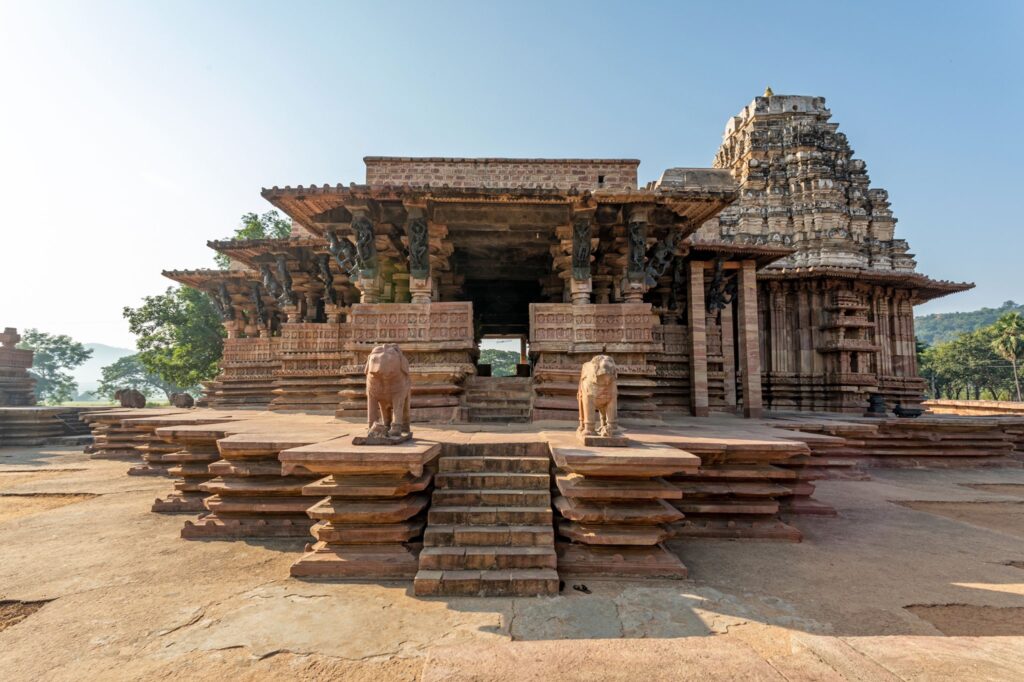
This is good news for Indian in the latest inscription UNESCO added two more monuments from Incredible India enters into UNESCO World Heritage Sites with these inscriptions total no. of UNESCO Sites in India is now 40. These two monuments are firstly the iconic Kakatiya Rudreshwara also known as Ramappa Temple from state of Telangana and second one is The ancient city of Dholavira in Gujarat, Well Preserved the Harappan City in the Rann of Kutch and . With inclusion of these two monuments India Enters into Super-40 club” for UNESCO World Heritage inscriptions. It is also a fact that India is home to several such ancient architecture marvels which are world famous even without UNESCO recognition.
Incredible India enters into UNESCO
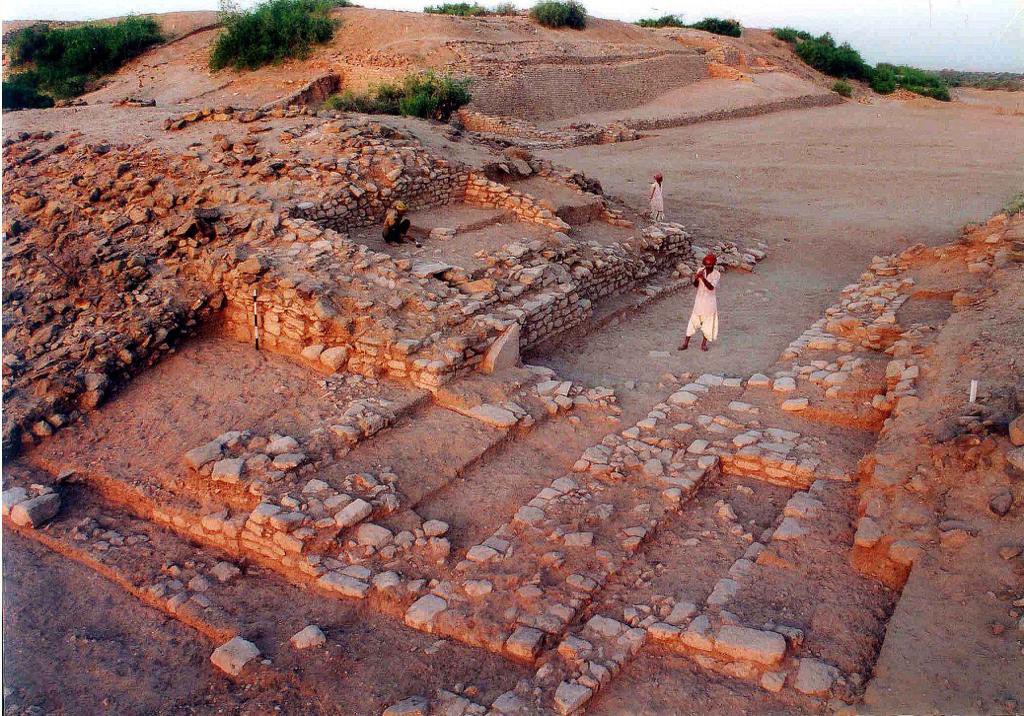
As per The World Heritage Committee of UNESCO, Dholavira has a better water management system, special burial structures, multi-layered defensive mechanisms and extensive use of stone in construction keep this preserved ancient city apart from other sites. First Discovered in 1960 by Jagat Patil Joshi by an ASI officer and excavation continued till 1990. Dholavira excavation site added new development in Indus valley civilisation studies dated back to 3rd millennium to 2nd millennium BCE (Before Common Era). Book your Dholavira tour packages from Ghum India Ghum which is a leading tour operator in delhi and tour and travel in delhi.
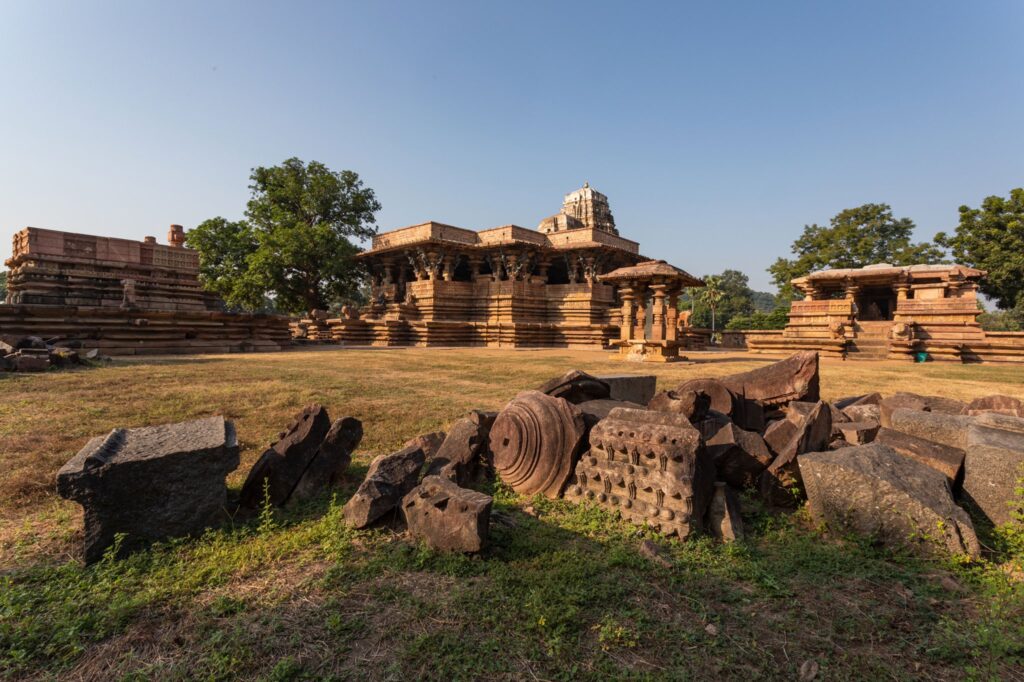
On 25th July,21, The World Heritage Committee of UNESCO also inscribed the iconic Kakatiya Rudreshwara (Ramappa) Temple, Telangana on the World Heritage List. This 13th Century temple is one of the best architectural marvel temples of India. This temple is made of floating bricks whose density is in between 0.085 to 0.9 grams per cubic cm which is lesser then density of water which is 1g/cc and other technique used is sandbox technology which saved this temple from earthquakes in 17th and 18th centuries. This temple was built by Recharla Rudra, a general of the Kakatiya empire during the rule of Kakatiya king Ganapati Deva. The main idol in this temple is Ramalingeswara Swamy. book your budget stay in Noida at the Noida hotel which is a Budget hotel in Noida and couple friendly hotels noida.
Dholavira
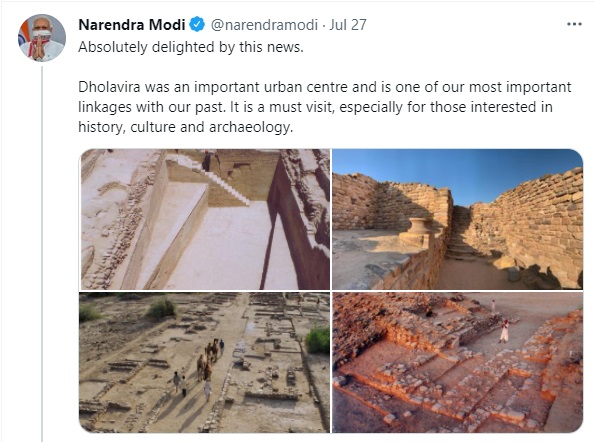
PM Modi tweeted hours after this announcement as Dholavira a “must visit” place for those interested in history, after the Harappan-era city in Gujarat got UNESCO’s world heritage tag.
Absolutely delighted by this news. Dholavira was an important urban centre and is one of our most important linkages with our past. It is a must visit, especially for those interested in history, culture and archaeology.
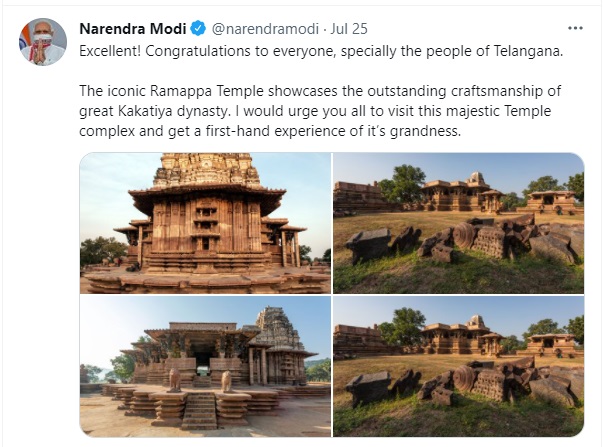
PM Narender Modi also tweeted on it and congratulated the people of Telangana Excellent! Congratulations to everyone, specially the people of Telangana. The iconic Ramappa Temple showcases the outstanding craftsmanship of the great Kakatiya dynasty. I would urge you all to visit this majestic Temple complex and get a first-hand experience of it’s grandness.
These additions going further to boost tourism for Incredible India, as well as for Telangana tourism and Gujarat tourism. Most of the ancient Indian monuments are full of architecture and Engineering marvels which surprise its visitors and force them to think where today’s architecture is more advanced or our ancestors’ times. You can book your Gujarat tour packages or Telangana tour packages from Ghum India Ghum which is a leading travel agency in Delhi, travel agents in delhi and Travel company in Delhi.
What Was the UNESCO Super-40 Club?
The expression “Super-40 club” was used in 2021 to describe countries with at least 40 properties inscribed on the UNESCO World Heritage List.
When Dholavira was added in July 2021, India reached the 40-property milestone. The country’s World Heritage portfolio at that point included 32 cultural properties, seven natural properties and one mixed property.
The milestone demonstrated the extraordinary diversity of India’s heritage, spanning archaeological sites, temples, monuments, historic cities, natural landscapes and cultural traditions.
Since then, India has continued to add sites to the UNESCO list. As of 2026, UNESCO lists 45 Indian properties on the World Heritage List.
Ramappa Temple: A Masterpiece of Kakatiyan Architecture
The Kakatiya Rudreshwara (Ramappa) Temple, popularly known as Ramappa Temple, is located at Palampet in Telangana, approximately 200 kilometres northeast of Hyderabad.
The temple was built during the Kakatiyan period, between the 12th and 13th centuries. UNESCO inscribed it on the World Heritage List in 2021 under criteria (i) and (iii).
The temple is dedicated to Lord Shiva and forms the centrepiece of a larger walled temple complex.
Why Is Ramappa Temple Special?
Ramappa Temple is remarkable for the combination of architecture, sculpture and engineering that went into its construction.
One of its most distinctive features is its pyramidal vimana, constructed using lightweight porous bricks often referred to as “floating bricks.” These helped reduce the weight of the roof structure.
The temple also contains beautifully carved pillars, beams and sculptures made from materials including sandstone, granite and dolerite.
The sculptures are particularly famous for their dynamic representation of human and animal figures, as well as their connection with regional dance traditions and Kakatiyan culture.
The Engineering Genius of Ramappa Temple
The architectural achievements of Ramappa Temple extend beyond its decorative beauty.
UNESCO highlights the use of a sandbox foundation, lightweight materials and sophisticated construction techniques. These innovations demonstrate the engineering knowledge of the Kakatiyan builders.
The temple was also designed in close relationship with its surrounding landscape, including the nearby Ramappa Cheruvu, a Kakatiya-built water reservoir.
This relationship between architecture, water, landscape, ritual and artistic expression is an important part of the site’s heritage value.
Ramappa Temple’s Sculptures
One of the most impressive features of the temple is its sculptural decoration.
The carved figures display movement and detail, with many sculptures representing aspects of Kakatiyan culture and regional dance traditions.
The craftsmanship demonstrates the ability of medieval Indian artisans to work extremely hard stone into delicate and expressive forms.
For visitors interested in Indian temple architecture, sculpture and history, Ramappa Temple offers an extraordinary insight into the artistic achievements of medieval South India.
Dholavira: A Window into the Harappan Civilization
While Ramappa Temple represents medieval India, Dholavira takes visitors thousands of years further back into the country’s history.
Located on the arid island of Khadir in Gujarat, Dholavira was one of the important urban centres of the Harappan Civilization.
UNESCO dates its occupation broadly from around 3000 to 1500 BCE and describes it as one of the well-preserved urban settlements of ancient South Asia.
Dholavira was inscribed on the UNESCO World Heritage List in 2021 under criteria (iii) and (iv).
What Makes Dholavira Extraordinary?
The most remarkable aspect of Dholavira is the sophistication of its ancient urban planning.
Archaeological remains reveal a carefully organised settlement featuring:
- A fortified city
- Castle and ceremonial areas
- Middle Town
- Lower Town
- Streets
- Residential areas
- Reservoirs
- Drainage and water-management structures
- A cemetery
- Craft and manufacturing areas
The site provides important evidence of the technological and organisational abilities of the Harappan people.
Dholavira’s Ancient Water Management System
Water was extremely valuable in the dry landscape of Kutch.
The people of Dholavira developed sophisticated systems for collecting, storing and managing water.
UNESCO identifies this water-management system as one of the site’s outstanding achievements. The settlement demonstrates how ancient communities adapted urban planning and engineering to challenging environmental conditions.
For modern travellers, the reservoirs and water infrastructure at Dholavira offer a fascinating glimpse into how an ancient civilisation solved one of its most important survival challenges.
Dholavira and Ancient Urban Planning
Dholavira was not simply a collection of ancient ruins.
Its organised layout demonstrates advanced approaches to urban planning, construction and social organisation.
UNESCO notes that the site illustrates achievements in areas including urban planning, construction techniques, water management, social governance, manufacturing, trade, art and belief systems.
The archaeological discoveries also include evidence of bead processing and objects made from materials such as copper, shell, stone, semi-precious stones, terracotta, gold and ivory.
These discoveries help researchers understand the economic and cultural life of the Harappan civilisation.
Why UNESCO World Heritage Status Matters
UNESCO World Heritage recognition brings international attention to sites considered to have Outstanding Universal Value.
For India, such recognition can help strengthen awareness of heritage conservation and encourage responsible cultural tourism.
It also gives international travellers another reason to explore destinations beyond India’s most famous landmarks.
Instead of limiting a trip to the Taj Mahal, Jaipur, Delhi or Goa, travellers can discover ancient archaeological sites, historic temples and lesser-known cultural landscapes.
Heritage Tourism in India
India’s UNESCO World Heritage portfolio provides an excellent foundation for heritage tourism.
Travellers can experience different periods of Indian history through destinations such as:
- Dholavira in Gujarat
- Ramappa Temple in Telangana
- Taj Mahal in Uttar Pradesh
- Qutub Minar in Delhi
- Ajanta and Ellora Caves in Maharashtra
- Hampi in Karnataka
- Mahabalipuram in Tamil Nadu
- Khajuraho in Madhya Pradesh
- Jaipur in Rajasthan
- Nalanda in Bihar
- Sanchi in Madhya Pradesh
- Konark Sun Temple in Odisha
Each destination tells a different story about India’s architecture, religion, technology, art, trade and social development.
Visiting Dholavira
Dholavira is located in the Kutch region of Gujarat and offers a very different travel experience from India’s traditional monument circuits.
The surrounding landscape is arid and dramatic, making the archaeological remains particularly striking.
Travellers visiting Dholavira can explore the remains of the ancient settlement and learn about Harappan urban planning, water systems, architecture and daily life.
The site is also associated with the wider landscape of the Kutch region, making it possible to combine heritage exploration with a broader Gujarat itinerary.
Visitors should check current access arrangements, local conditions and site guidelines before travelling.
Visiting Ramappa Temple
Ramappa Temple is located at Palampet in Telangana.
It can be combined with other attractions in the wider Telangana region, particularly for travellers interested in temple architecture, archaeology and the history of the Deccan.
Visitors should allow sufficient time to appreciate the detailed carvings and architectural elements rather than treating the temple as a quick sightseeing stop.
The surrounding landscape and Ramappa Lake also contribute to the character of the heritage site.
India’s Growing UNESCO Heritage Portfolio
The 2021 “Super-40” milestone was not the end of India’s UNESCO journey.
India subsequently added Santiniketan in 2023, the Sacred Ensembles of the Hoysalas in 2023, the Moidams of Assam in 2024, and the Maratha Military Landscapes of India in 2025. UNESCO’s current country listing shows 45 World Heritage properties, including the Ancient Buddhist Site of Sarnath inscribed in 2026.
This continued expansion demonstrates the breadth of India’s cultural and natural heritage.
Why Travellers Should Explore India’s UNESCO Sites
UNESCO World Heritage Sites provide travellers with an opportunity to see India through different historical lenses.
You can explore:
Ancient India through Dholavira and other archaeological sites.
Medieval India through temples, forts and historic cities.
Colonial-era India through historic urban and architectural ensembles.
Natural India through national parks, mountain landscapes and biodiversity-rich regions.
This makes UNESCO heritage tourism particularly valuable for travellers seeking deeper cultural experiences.
Responsible Heritage Tourism
Visiting a UNESCO World Heritage Site comes with a responsibility to protect it.
Travellers should:
- Follow monument rules
- Avoid touching or climbing protected structures
- Never remove stones or archaeological objects
- Dispose of waste responsibly
- Respect religious practices
- Follow photography restrictions
- Listen to guides and site authorities
- Avoid damaging carvings and surfaces
- Support responsible local tourism
- Respect local communities
Preserving these places ensures that future generations can experience the same heritage.
Final Thoughts
The addition of Ramappa Temple and Dholavira in 2021 marked a significant moment for India’s heritage tourism story.
Ramappa Temple showcases the extraordinary combination of Kakatiyan architecture, sculpture and engineering, while Dholavira provides a remarkable window into the urban sophistication of the Harappan Civilization. UNESCO recognised both sites for their Outstanding Universal Value.
The “Super-40” milestone belonged specifically to 2021. Today, India’s UNESCO World Heritage portfolio has grown further, reaching 45 properties as of 2026.
For travellers, this expanding list is an invitation to explore a deeper side of India—one where ancient cities, magnificent temples, archaeological landscapes and living cultural traditions tell the story of a civilisation that has evolved across thousands of years.
