
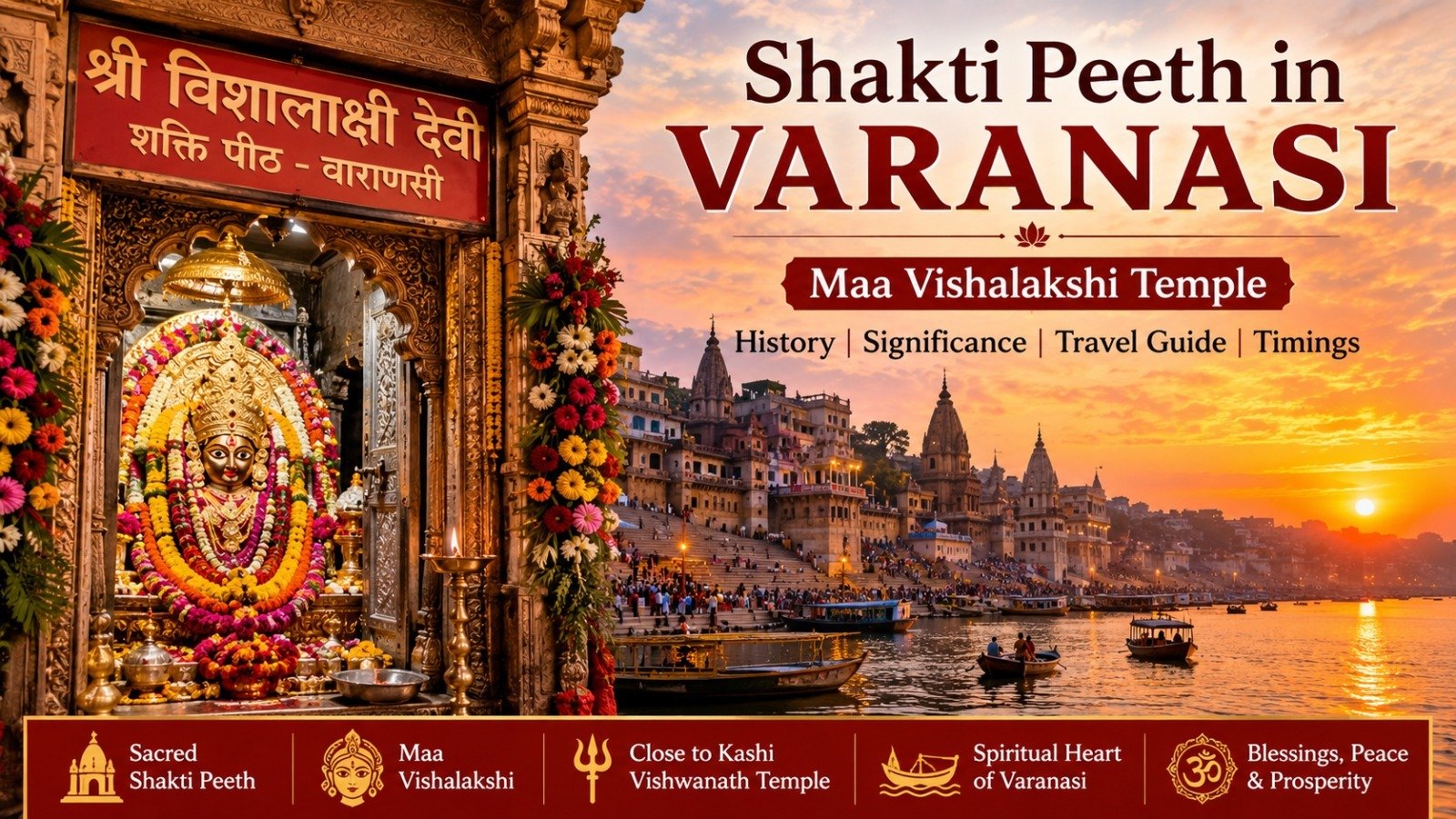

Varanasi, also known as Kashi or Banaras, is one of the oldest continuously inhabited cities in the world and the spiritual heart of India. Every year, millions of pilgrims and travelers from India, the United States, Europe, and across the globe visit this sacred city to seek blessings, witness the mesmerizing Ganga Aarti, and experience its timeless culture. While the magnificent Kashi Vishwanath Temple attracts most visitors, many are unaware that Varanasi is also home to one of the most revered Shakti Peeths in India – the Maa Vishalakshi Temple. The Shakti Peeth in Varanasi, dedicated to Goddess Vishalakshi, holds immense significance in Hindu mythology and is considered one of the holiest shrines devoted to Goddess Shakti. For devotees, a pilgrimage to Kashi is often considered incomplete without offering prayers at this sacred temple.
Whether you are planning a spiritual pilgrimage, a heritage tour, or a cultural exploration of Varanasi, this comprehensive guide covers everything you need to know about the Vishalakshi Shakti Peeth, including its mythology, history, religious significance, architecture, temple timings, and travel information.
What is a Shakti Peeth?
Before understanding the importance of the Shakti Peeth in Varanasi, it is essential to know the fascinating legend behind the Shakti Peeths.
According to Hindu mythology, Goddess Sati, the daughter of King Daksha and the first consort of Lord Shiva, sacrificed herself during the famous Daksha Yajna after her father insulted Lord Shiva publicly. Overwhelmed with grief, Lord Shiva carried Sati’s lifeless body across the universe, performing the cosmic dance known as the Tandava.
To restore cosmic balance, Lord Vishnu used his Sudarshan Chakra to divide Sati’s body into several parts. These sacred body parts fell at different locations across the Indian subcontinent. Each place where a body part or ornament landed became a Shakti Peeth, revered as a divine seat of Goddess Shakti.
Today, there are traditionally 51 Shakti Peeths, although some scriptures mention 52 or even 108 sacred sites. Each Shakti Peeth is associated with a particular manifestation of Goddess Shakti and a corresponding form of Lord Shiva, known as Bhairava.
Among these sacred sites, the Vishalakshi Temple in Varanasi occupies a special place because of its location in Kashi, the city believed to grant liberation (Moksha).
Why is Vishalakshi Temple Considered the Shakti Peeth in Varanasi?
The Vishalakshi Temple, situated close to the famous Manikarnika Ghat and Kashi Vishwanath Temple, is recognized as the principal Shakti Peeth in Varanasi.
According to ancient traditions, the earring (Manikarna) or, according to some beliefs, the face or eye ornament of Goddess Sati fell at this location. This is why the temple is closely associated with the nearby Manikarnika Ghat, one of Hinduism’s holiest cremation grounds.
The presiding deity, Goddess Vishalakshi, is worshipped as an incarnation of Goddess Parvati. The name “Vishalakshi” means “the one with large, compassionate eyes,” symbolizing divine grace, protection, and wisdom.
The temple’s Bhairava is believed to be Kala Bhairava, the guardian deity of Kashi. Devotees often visit both temples during their pilgrimage, as it is considered spiritually rewarding to seek the blessings of Goddess Vishalakshi and Lord Kala Bhairava together.
History of Vishalakshi Temple
The origins of the Vishalakshi Temple are ancient, although the present structure has undergone several renovations over the centuries.
References to Goddess Vishalakshi can be found in various Hindu scriptures, including the Skanda Purana, which extensively describes the glory of Kashi. For centuries, saints, scholars, and devotees have regarded the temple as one of the most sacred centers of Shakti worship.
Historically, Varanasi has witnessed numerous invasions and periods of reconstruction. Like many temples in the city, the Vishalakshi Temple has been restored multiple times by devotees and local rulers, ensuring that its spiritual legacy continues uninterrupted.
Despite its relatively modest size compared to the nearby Kashi Vishwanath Temple, the Vishalakshi Temple attracts thousands of devotees daily who come to seek blessings for prosperity, family well-being, marriage, and spiritual growth.
Today, the temple stands as a powerful reminder of India’s enduring spiritual traditions and the devotion of countless pilgrims who have visited it over the centuries.
The Mythology Behind Maa Vishalakshi
The mythology surrounding Maa Vishalakshi beautifully complements the sacred traditions of Kashi.
Hindu belief holds that Goddess Vishalakshi watches over the city of Varanasi with compassion and maternal love. Along with Lord Vishwanath (Shiva) and Goddess Annapurna, she forms an important spiritual triad protecting the holy city.
Many devotees believe that worshipping Goddess Vishalakshi removes obstacles, grants peace of mind, strengthens family relationships, and fulfills sincere wishes. Newly married couples, families seeking children, and devotees praying for prosperity frequently visit the temple.
The temple also symbolizes the divine feminine energy (Shakti), representing creation, wisdom, compassion, and spiritual awakening.
For devotees following the Shakti tradition, visiting the Vishalakshi Temple is considered as spiritually significant as visiting other renowned Shakti Peeths across India.
Religious Significance of the Shakti Peeth in Varanasi
The Shakti Peeth in Varanasi occupies a unique position in Hindu pilgrimage because it combines two of Hinduism’s most revered traditions, Shaivism and Shaktism.
While Lord Shiva is worshipped as Kashi Vishwanath, Goddess Vishalakshi represents the divine feminine energy that complements Shiva. Together, they symbolize cosmic balance and universal harmony.
Pilgrims believe that visiting the Vishalakshi Temple offers several spiritual benefits:
- Blessings for marital harmony
- Prosperity and abundance
- Protection from negative energies
- Spiritual growth and inner peace
- Fulfillment of heartfelt wishes
- Divine grace for family well-being
Many devotees also perform special prayers during Navratri, believing that Goddess Vishalakshi blesses those who worship her with unwavering faith.
Architecture of Vishalakshi Temple
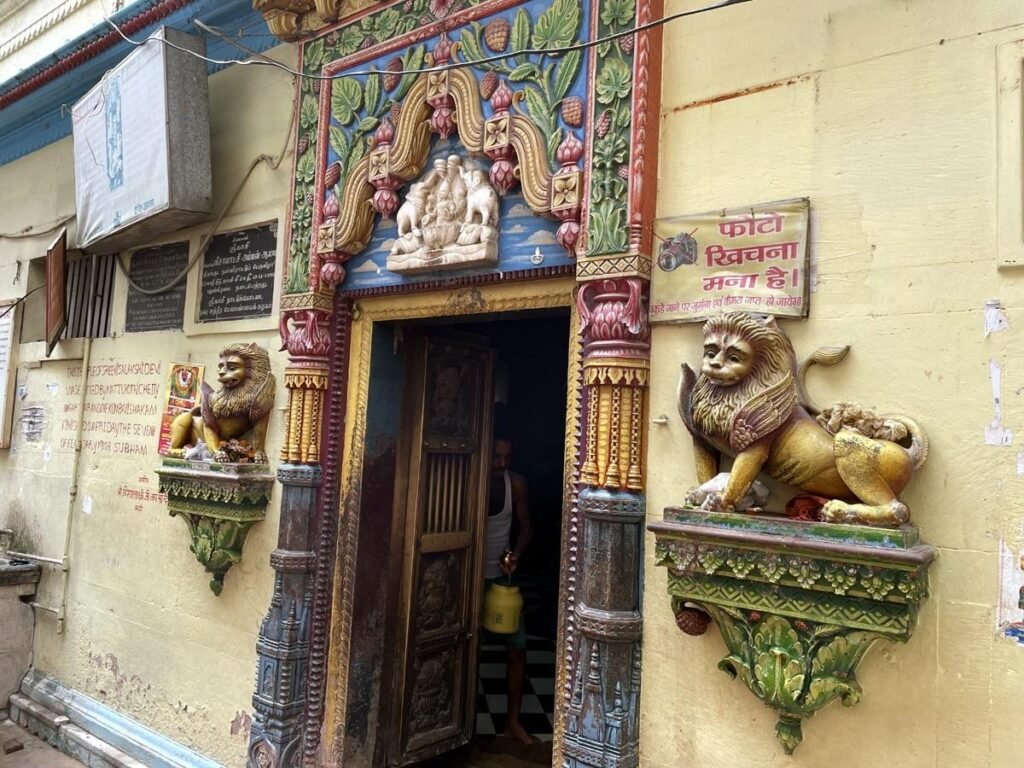
Although relatively compact in size, the Vishalakshi Temple showcases the elegance of traditional North Indian temple architecture.
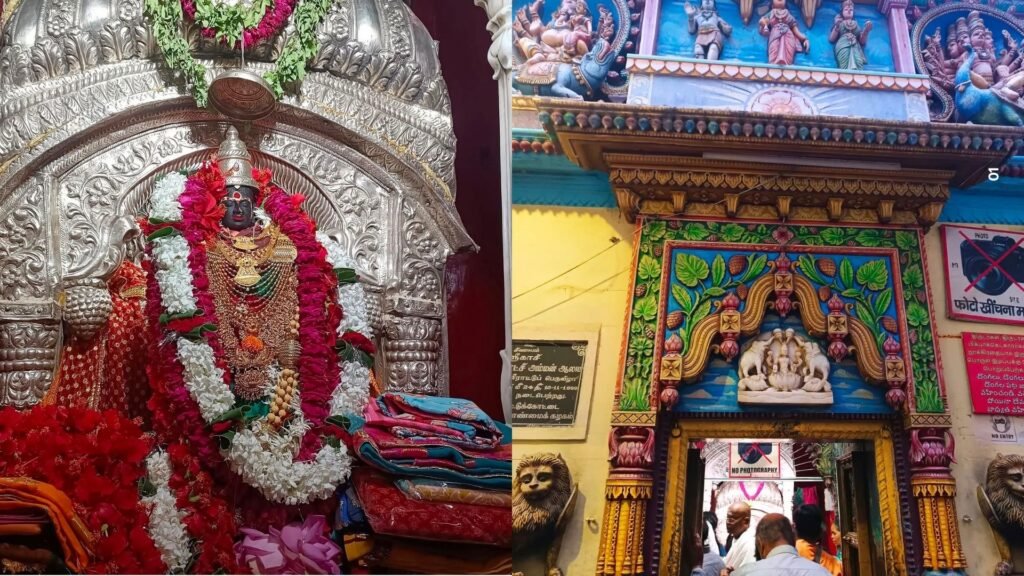
The temple’s entrance opens into a peaceful courtyard that immediately creates a spiritual atmosphere. Intricately carved pillars, vibrant decorations, and colorful motifs enhance the temple’s sacred ambiance.
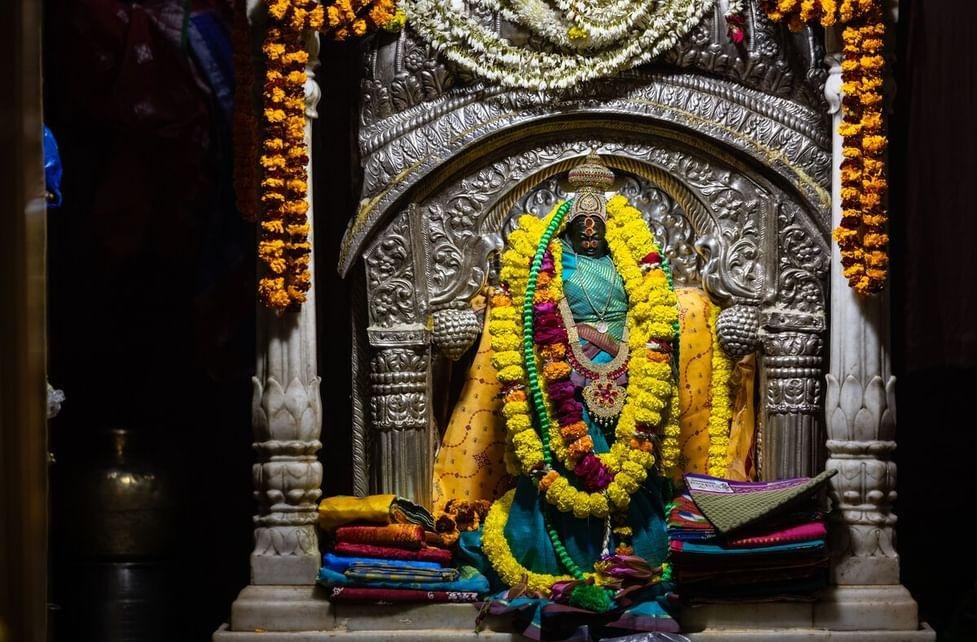
Inside the sanctum, devotees can witness the beautifully adorned idol of Goddess Vishalakshi, decorated with flowers, silk garments, ornaments, and traditional jewelry. The divine image radiates serenity and compassion, drawing countless worshippers throughout the day.
The temple walls display intricate carvings inspired by Hindu mythology, while devotional hymns and the fragrance of incense create an atmosphere of devotion.
Unlike many larger temple complexes, the Vishalakshi Temple retains an intimate spiritual character, allowing visitors to experience a close connection with the deity.
Its narrow lanes, traditional markets, and proximity to the ancient ghats further enrich the experience, transporting visitors into the timeless spiritual heritage of Varanasi.
Temple Timings
The Vishalakshi Temple is generally open every day of the week.
Opening Hours
- Morning: 5:00 AM – 12:00 PM
- Evening: 4:00 PM – 9:00 PM
The temple is especially crowded during:
- Navratri
- Chaitra Navratri
- Sharad Navratri
- Fridays
- Mondays
- Major Hindu festivals
Devotees planning a peaceful darshan are advised to visit early in the morning when the atmosphere is calm and less crowded.
Note: Temple timings may change during festivals and special religious occasions. It is always advisable to verify the latest schedule before planning your visit.
How to Reach the Shakti Peeth in Varanasi
The Vishalakshi Temple is conveniently located in the heart of Varanasi, making it easily accessible from major transportation hubs.
By Air
The nearest airport is Lal Bahadur Shastri International Airport, approximately 25 kilometers from the temple. Taxis, app-based cabs, and private transfers are readily available.
By Train
Varanasi Junction (Cantt Railway Station) is around 5–6 kilometers away and is well connected to major Indian cities, including Delhi, Mumbai, Kolkata, Chennai, and Lucknow.
By Road
Varanasi enjoys excellent road connectivity through national highways. State transport buses, luxury coaches, and private taxis operate regularly from nearby cities such as Prayagraj, Ayodhya, Gorakhpur, and Lucknow.
Local Transport
To reach the temple, visitors can use:
- Auto-rickshaws
- E-rickshaws
- Cycle rickshaws
- Taxi services
The last stretch to the temple passes through Varanasi’s famous narrow lanes, so comfortable walking shoes are recommended.
Best Time to Visit the Shakti Peeth in Varanasi
The Shakti Peeth in Varanasi, dedicated to Maa Vishalakshi, welcomes devotees throughout the year. However, choosing the right season can make your pilgrimage more comfortable and spiritually enriching.
Winter (October to March) – The Best Season
Winter is considered the ideal time to visit Vishalakshi Temple Varanasi. Pleasant temperatures ranging between 10°C and 25°C make it comfortable to explore the temple, ghats, and nearby attractions on foot.
This period also coincides with several important festivals and offers visitors the chance to witness the magical evening Ganga Aarti at Dashashwamedh Ghat in a pleasant climate.
Summer (April to June)
Summers in Varanasi can be extremely hot, with temperatures exceeding 40°C. If you visit during this season, it is advisable to complete temple visits early in the morning or after sunset.
Monsoon (July to September)
Monsoon transforms Varanasi into a lush and beautiful destination. While occasional heavy rains may affect sightseeing, the city takes on a unique spiritual charm during this time. Pilgrims should carry umbrellas and wear footwear suitable for wet streets.
Major Festivals Celebrated at Vishalakshi Temple
The Shakti Peeth in Varanasi comes alive during major Hindu festivals, attracting thousands of devotees from across India and abroad.
Navratri
Navratri is the most significant festival celebrated at the temple. Devotees observe fasting, offer flowers and prayers, and participate in special pujas dedicated to Maa Vishalakshi.
Chaitra Navratri
Celebrated in spring, this festival marks the beginning of the Hindu New Year in many regions. The temple is beautifully decorated, and special rituals are performed throughout the nine days.
Sharad Navratri
The autumn Navratri is one of the busiest times at the temple. Pilgrims from across the country gather to seek the blessings of Goddess Vishalakshi.
Diwali
The temple is illuminated with thousands of lamps, creating a breathtaking spiritual atmosphere.
Mahashivratri
Although dedicated to Lord Shiva, Mahashivratri also sees large crowds visiting Vishalakshi Temple due to its close association with Kashi Vishwanath.
Dev Deepawali
Celebrated fifteen days after Diwali, Dev Deepawali transforms the ghats of Varanasi into a sea of lights. Visiting Vishalakshi Temple during this period offers a truly unforgettable spiritual experience.
Top Places to Visit Near Vishalakshi Temple
One of the biggest advantages of visiting the Shakti Peeth in Varanasi is that several of the city’s most sacred attractions are located within walking distance.
Kashi Vishwanath Temple
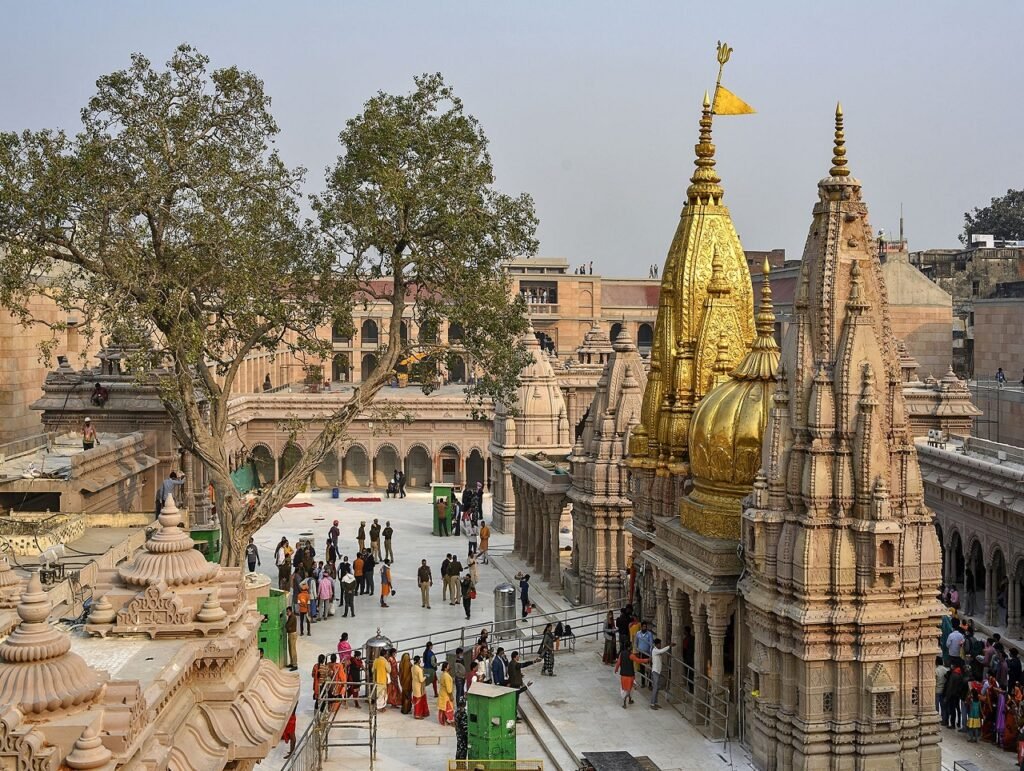
Located just a few minutes away, this iconic temple dedicated to Lord Shiva is among the twelve Jyotirlingas of India. Many pilgrims visit Vishalakshi Temple and Kashi Vishwanath together as part of a complete spiritual journey.
Manikarnika Ghat
One of the holiest cremation ghats in Hinduism, Manikarnika Ghat symbolizes the cycle of life, death, and liberation.
Dashashwamedh Ghat
Famous for the spectacular evening Ganga Aarti, this ghat offers one of the most memorable spiritual experiences in India.
Annapurna Temple
Dedicated to Goddess Annapurna, the deity of nourishment and abundance, this temple is an important stop for devotees visiting Kashi.
Kal Bhairav Temple
Known as the guardian deity of Varanasi, Lord Kal Bhairav protects everyone who enters the sacred city, according to Hindu tradition.
Assi Ghat
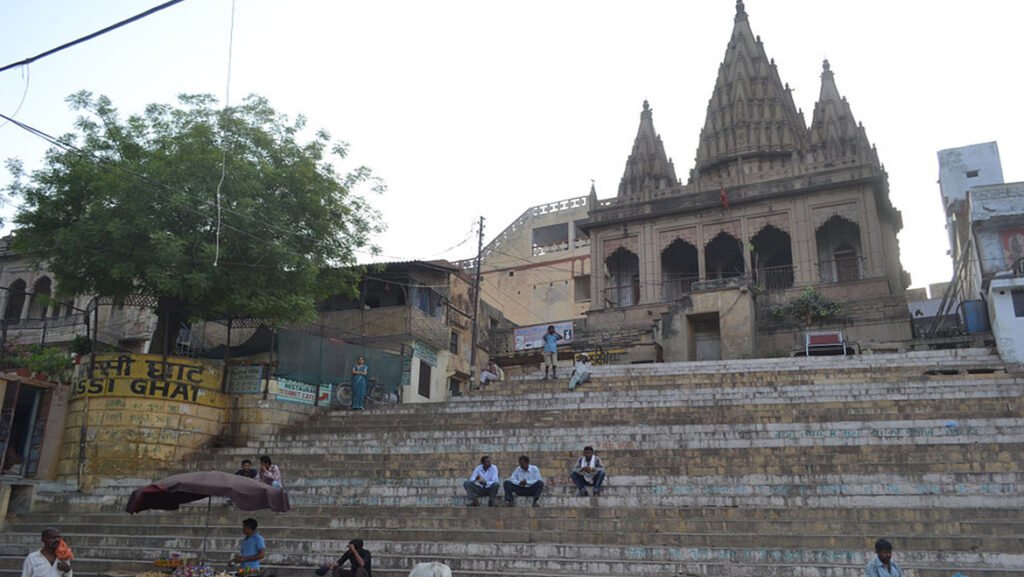
A peaceful destination for sunrise boat rides, yoga sessions, and cultural performances.
Sankat Mochan Hanuman Temple
One of the most revered Hanuman temples in North India, attracting devotees seeking protection and strength.
Tulsi Manas Temple
According to tradition, Goswami Tulsidas composed the Ramcharitmanas at this site.
Sarnath
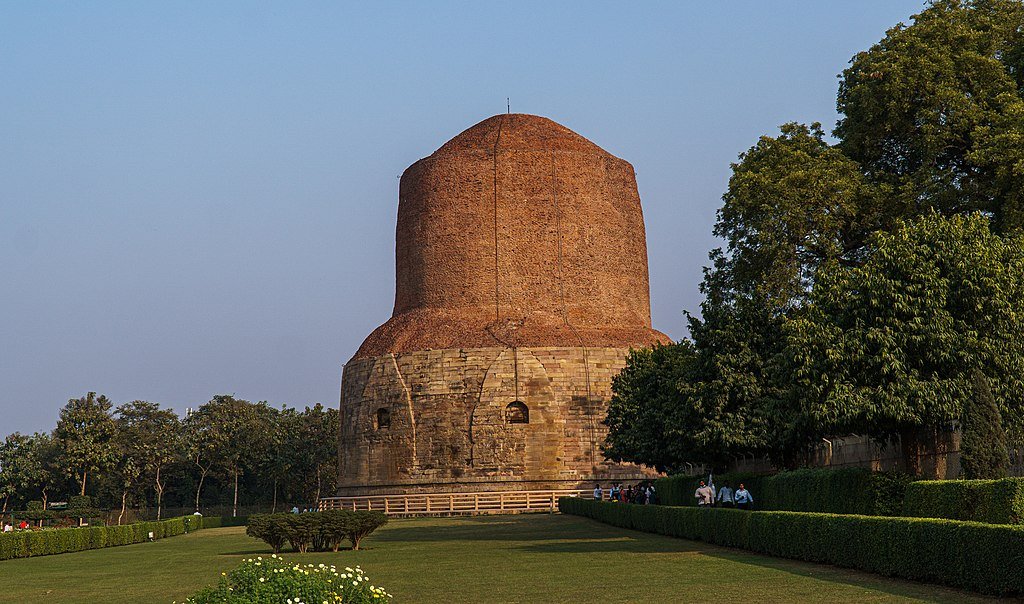
Located around 10 km from Varanasi, Sarnath is one of Buddhism’s holiest sites, where Lord Buddha delivered his first sermon after attaining enlightenment.
Suggested 2-Day Pilgrimage Itinerary
Day 1
- Early morning darshan at Kashi Vishwanath Temple
- Visit Maa Vishalakshi Temple (Shakti Peeth in Varanasi)
- Offer prayers at Annapurna Temple
- Explore Manikarnika Ghat
- Lunch at a traditional Banarasi restaurant
- Visit Kal Bhairav Temple
- Attend the spectacular Ganga Aarti at Dashashwamedh Ghat
- Enjoy an evening walk through the old city markets
Day 2
- Sunrise boat ride on the Ganges
- Visit Assi Ghat
- Explore Tulsi Manas Temple
- Visit Sankat Mochan Temple
- Excursion to Sarnath
- Shopping for Banarasi silk sarees and handicrafts
- Departure
This itinerary offers a perfect blend of spirituality, history, culture, and local experiences.
What to Eat in Varanasi
No trip to Varanasi is complete without tasting its legendary cuisine.
Popular local delicacies include:
- Kachori Sabzi
- Tamatar Chaat
- Banarasi Chaat
- Malaiyo (winter specialty)
- Rabri
- Jalebi
- Banarasi Lassi
- Banarasi Paan
- Thandai (seasonal)
Travelers from the US and Europe often enjoy joining guided food walks to experience the city’s authentic flavors while learning about its culinary traditions.
Shopping Near Vishalakshi Temple
Varanasi is famous for its vibrant markets and traditional craftsmanship.
Don’t miss shopping for:
- Authentic Banarasi Silk Sarees
- Handmade shawls
- Brass idols
- Rudraksha malas
- Wooden toys
- Copper utensils
- Spiritual books
- Incense sticks
- Handcrafted souvenirs
Popular shopping areas include Vishwanath Gali, Godowlia Market, Chowk, and Thatheri Bazaar.
Essential Travel Tips
To make your pilgrimage smooth and memorable, keep these tips in mind:
- Visit early in the morning to avoid crowds.
- Wear modest clothing suitable for temple visits.
- Remove footwear before entering temple premises.
- Carry cash, as smaller vendors may not accept digital payments.
- Keep your belongings secure in crowded areas.
- Hire an experienced local guide for deeper cultural insights.
- Stay hydrated, especially during summer.
- Respect local customs and photography restrictions.
- Consider booking your accommodation near the ghats for easier access to major temples.
Frequently Asked Questions
A: Maa Vishalakshi Temple is the most revered Shakti Peeth in Varanasi.
A: Hindu tradition identifies it as one of the sacred places where a part of Goddess Sati’s body or ornament fell.
A: Yes, it is located within walking distance.
A: Generally, 5:00 AM–12:00 PM and 4:00 PM–9:00 PM.
A: No, entry is free for devotees.
A: Yes. Visitors from all over the world are welcome, provided they respect local customs.
A: October to March offers the most pleasant weather.
A: Yes, many pilgrims visit both temples together.
A: Yes, local guides and tour operators can assist with temple visits and city tours.
Why Book Your Varanasi Pilgrimage with Ghum India Ghum?
A visit to the Shakti Peeth in Varanasi becomes even more meaningful when your journey is carefully planned. Whether you are traveling from the United States, Europe, or anywhere in India, choosing an experienced travel partner helps you focus on the spiritual experience while every logistical detail is taken care of.
Ghum India Ghum, recognized as a Best Tour Operator for India and a trusted DMC for India, specializes in curated cultural and spiritual journeys. Their experienced team offers customized itineraries, knowledgeable local guides, comfortable transportation, carefully selected accommodations, and seamless travel arrangements for individuals, families, senior travelers, and groups.
Explore their specially designed pilgrimage and heritage tours:
- Varanasi Tour Packages: https://www.ghumindiaghum.com/varanasi-tour-packages
- Kashi Circuit Tour Package: https://www.ghumindiaghum.com/kashi-circuit-tour-package.php
- Indian Golden Triangle with Varanasi by Train: https://www.ghumindiaghum.com/indian-golden-triangle-with-varanasi-by-train.php
These tours combine the spiritual essence of Kashi with India’s rich cultural heritage, making them ideal for first-time visitors as well as returning pilgrims.
Final Thoughts
The Shakti Peeth in Varanasi, revered as the sacred abode of Maa Vishalakshi, is much more than an ancient temple, it is a place where mythology, faith, history, and living traditions come together. Whether you are seeking spiritual peace, exploring India’s sacred heritage, or planning a memorable pilgrimage with your family, the Vishalakshi Temple offers an experience that remains with you long after your journey ends.
Combine your visit with the divine Kashi Vishwanath Temple, the serene ghats of the Ganges, the wisdom of Sarnath, and the vibrant streets of old Banaras to experience one of the world’s oldest living cities in its fullest form.
If you are planning a spiritual holiday, let Ghum India Ghum – Best Tour Operator for India and a trusted DMC for India help you create a personalized itinerary that matches your interests, travel style, and budget. With expertly crafted tour packages and local expertise, your pilgrimage to Varanasi can become a truly unforgettable journey of faith, culture, and discovery.
