Day 01:- Delhi to Haridwar/ Rishikesh (230kms/5hrs)
Upon arrival at the Delhi Railway Station or Airport, our representative will warmly welcome you outside the exit gate. From there, proceed on a scenic drive to Haridwar/Rishikesh one of the most spiritually significant destinations in India for Hindus. Rishikesh, located on the banks of the sacred Ganges River and surrounded by the Shivalik ranges of the Himalayas on three sides, is known for its serene atmosphere and divine charm. Widely recognized as the “Yoga Capital of the World,” it attracts seekers from across the globe for yoga, meditation, and spiritual learning. Upon reaching Rishikesh, check into your hotel and relax. Later, begin your sightseeing tour covering prominent temples and ghats. Visit the iconic suspension bridges, Laxman Jhula and Ram Jhula, along with Parmarth Niketan Ashram, Triveni Ghat, and Shivananda Ashram. In the evening, witness the mesmerizing Ganga Aarti ceremony on the banks of the river, a truly soul-stirring experience. Return to the hotel for an overnight stay in Rishikesh.
Day 02:- Rishikesh to Sitapur/ Guptkashi
After enjoying a wholesome breakfast, check out from your hotel in Rishikesh and begin a picturesque drive towards Guptkashi (or Sitapur), covering approximately 190-220 km. This journey marks the beginning of your sacred Kedarnath and Badrinath Dham Yatra. Upon reaching your destination, check into your hotel and relax. The rest of the day is at leisure, allowing you to unwind after the long drive or explore Guptkashi's serene surroundings at your own pace. Overnight stay in Guptkashi/Sitapur.
Day 03:- Guptakashi/ Sitapur to Kedarnath temple Jyotirlinga darshan ( 16Kms trek / 07-08 Hrs)
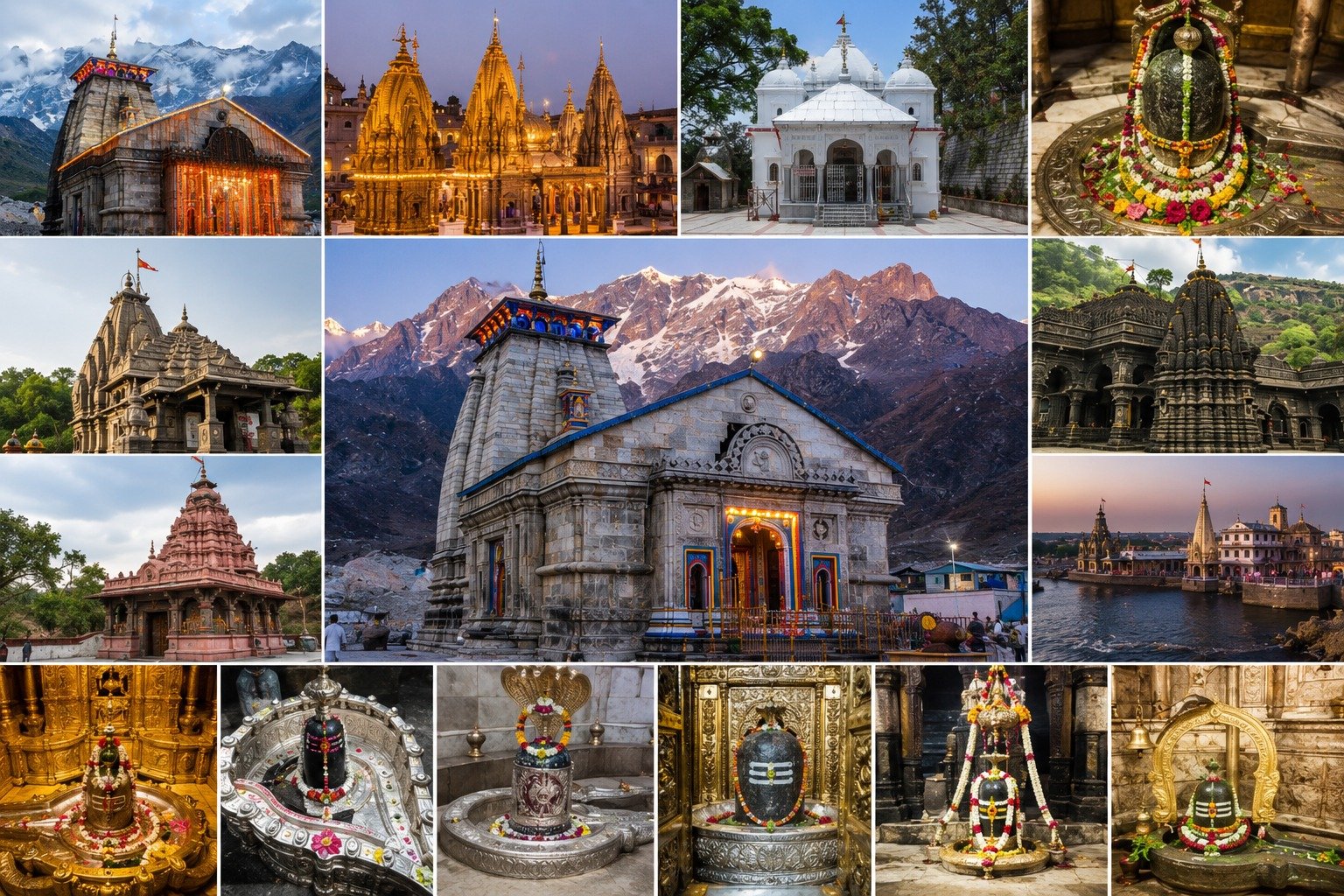
Early morning drop at Sonprayag on your Kedarnath yatra, either for trekking or pony ride or proceed to your helipad according to your chopper timing. For Pony and trek, take a shared cab to Gaurikund from Sonprayag. From Gaurikund you will start your 16 kms journey to Kedarnath Dham trek with pony or Doli (Cost Not Included). River Mandakini, one of the main tributaries of the Holy River Ganges originates at Kedarnath and flows through Gaurikund, you may take a bath at a hot spring at Gaurikund. Chant with the other pilgrims on the way, who are coming from all around India chanting Jai Bholenath, Har Har Mahadev or Jai Shiv Shambho. Sometimes huge mist would envelop the mountains and slowly it would go away, revealing a shiny blinding-white snowcapped peak. On Arrival, Check-in to the shared Ashram booked by us, relax for few hours then go for darshan of Lord Shiva inside Kedarnath temple, you will be amazed by the beauty of this holy town. After darshan, take as many pictures as you want, capturing the temple with the stunning mountains in the background. Stay overnight at the Ashram in Kedarnath.
Kedarnath temple timings
Kedarnath Temple is open to visitors every day from 4:00 AM to 3:00 PM, then again from 5:00 PM to 9:00 PM. During the two-hour gap in between, the temple shuts its doors for routine cleaning and the daily rituals performed by the priests.
Unlike many temples that stay open year-round, Kedarnath can only be visited during a specific window each year. The pilgrimage season generally begins in mid-April and continues until a few days before Diwali, after which the shrine closes for winter. Because these dates are set according to the Hindu calendar, the exact opening and closing days shift slightly from year to year, so it's a good idea to check the official schedule closer to your travel dates.
Day 04:- Kedarnath Valley to Sitapur/Phata/ Guptkashi (16kms trek/6-7 hrs)
Rise early to witness the divine morning Aarti at the revered Kedarnath Temple, a spiritually uplifting start to the day. Check out from the Ashram, set out on your return trek towards Sitapur/Guptkashi (by Heli/Pony or Trekking). On arrival, check into your pre-booked hotel and enjoy the rest of the day at leisure - a well-deserved break to relax and recharge after the trek.
Day 05:- Sitapur/Phata/ Guptkashi to Delhi (430kms/9-10hrs)
After breakfast, check out from the hotel and Later drive back to Delhi which is the capital of India, offering a diverse mix of historical landmarks and vibrant cultural experiences. From ancient monuments to modern architectural marvels, Delhi presents a unique blend of the old and new. The city's rich heritage is evident in the historic sites of Old Delhi, while New Delhi showcases the grandeur of British-era buildings and wide, tree-lined avenues. On arrival Check-in to the hotel. Overnight in Delhi.
Day 06:- Delhi to Varanasi (by Flight/Vande Bharat at own expense)|Varanasi local with Kashi Vishwanath Jyotirlinga temple
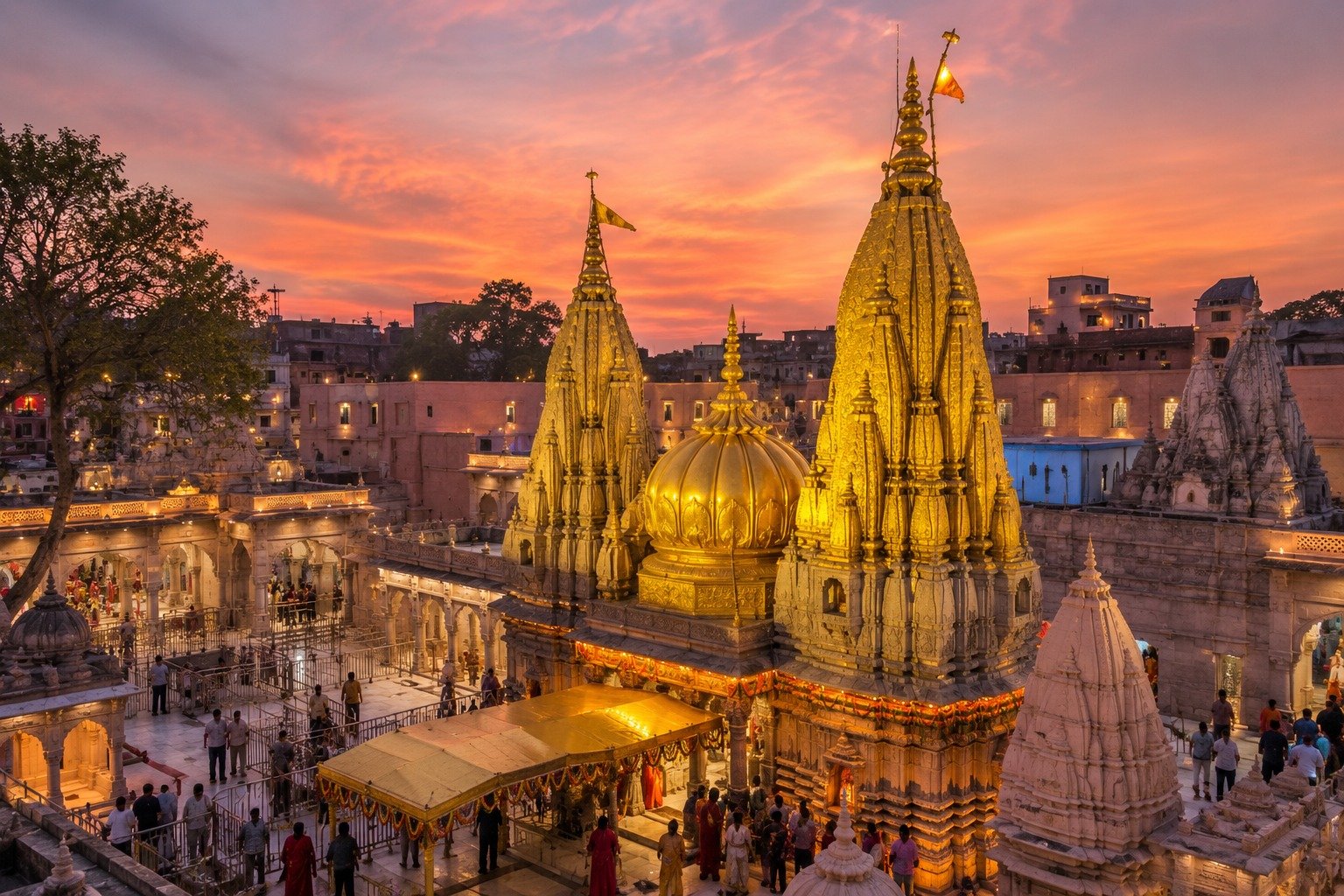
After breakfast, Check-out and drop at Delhi Airport or Railway station to board a Train or Flight to Varanasi. Upon arrival at Kashi airport or Railway station, meet and greet our representative outside the exit gate. Varanasi is a city in the northern Indian state of Uttar Pradesh dating to the 11th century B.C, enjoy, Varanasi is one of the holiest cities in India and famous for its vibes and charm that are hard to describe; one needs to visit Varanasi to experience it. On arrival check-in to the hotel and later go for Varanasi darshan tour, visiting Annapurna Devi, Manas Temple, Vishwanath Temple (an important Jyotirlingam and temple corridor), Sankat Mochan temple, Durga Kund, Vishalakshi Devi and Birla Temple - Banaras Hindu University, You also visit Nepali temple, which was constructed by the King of Nepal and is a replica of the Pashupatinath temple in Kathmandu. Later visit famous ghats of Varanasi :- Harishchandra, Manikarnaka also known as burning ghat (It is believed that a dead human's soul finds salvation, when cremated here), Dashashwamedh Ghat,etc. In the evening, Participate in the world famous Ganga Aarti. Post tour return back to hotel. Enjoy your overnight stay in Varanasi.
Kashi vishwanath temple timings
Shri Kashi Vishwanath Temple in Varanasi generally welcomes visitors from 2:30 AM until 11:00 PM each day. Pilgrims can perform darshan at most hours, though the temple briefly restricts entry during specific aarti (ritual worship) periods to allow the ceremonies to proceed undisturbed.
Day 07:- Varanasi (Boat ride)- Sarnath- Varanasi
In early morning one can choose to take subah-e-banaras(Sunrise of Varanasi) boat trip(optional) to enjoy the sunrise and also see historical ghats of Varanasi. On a boat trip one can understand the tradition, culture of Kashi. Later, return to the hotel and have your yummy breakfast. In the afternoon, Sarnath is the place where Lord Buddha had preached his sermon/dharma to his first five disciples after attaining enlightenment. In Sarnath visit Dhamek Stupa - most visited and known as the most important Buddhist shrine in the World. Later, also visit Sarnath museum, Wat Thai Sarnath Temple, Main temple, Dhamekh Stupa and Chaukhandi Stupa of Sarnath, Post tour return back to hotel and rest of the time free to explore the city by yourself. Overnight in Varanasi.
Day 08:- Varanasi to Deoghar (Jharkhand) by Vande Bharat train
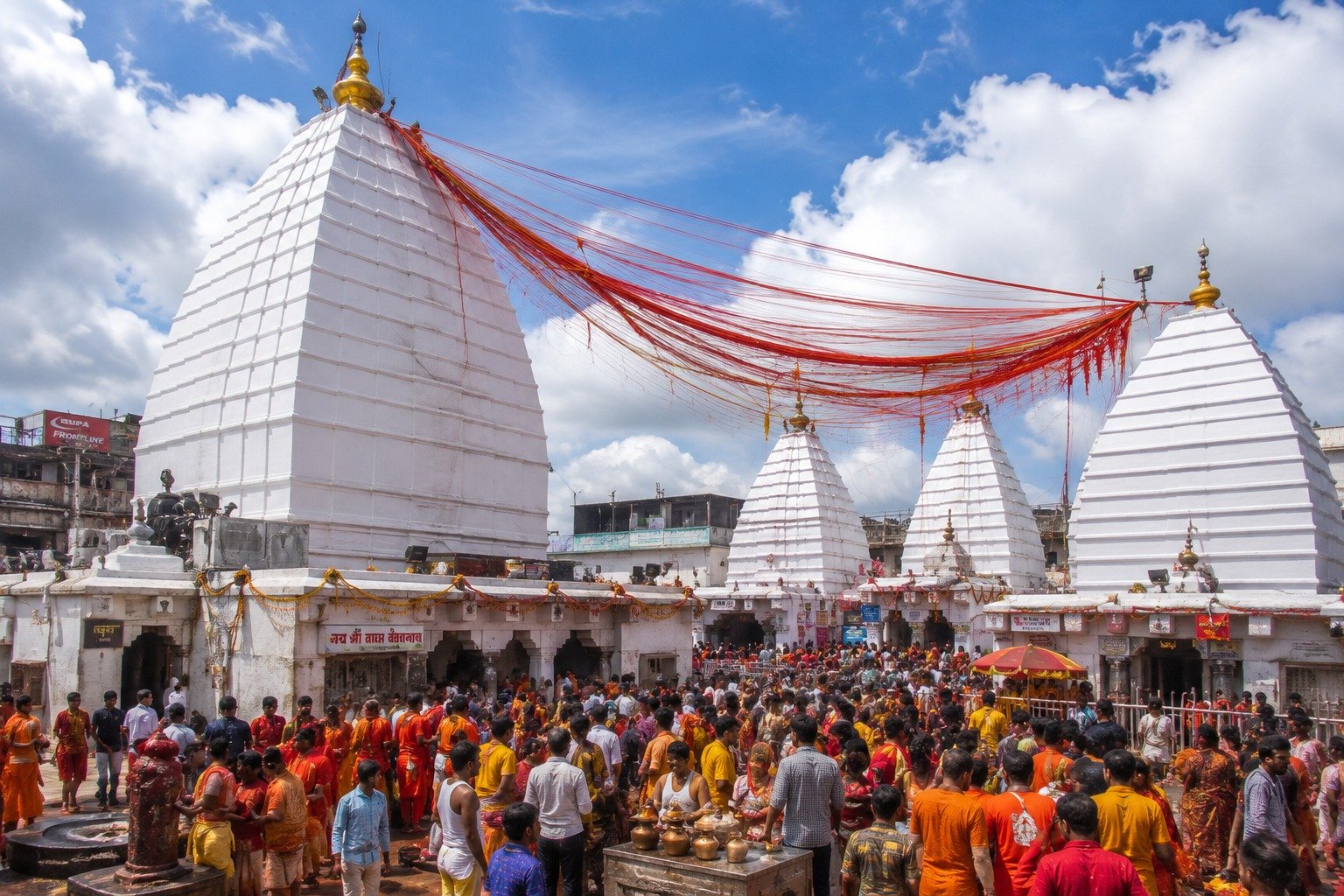
Today ask the hotel for a packed breakfast, check out, and proceed to the Varanasi station to board the Vande Bharat train to Deoghar. On arrival at Deoghar Railway station or Airport, Meet And greet our representative outside the exit gate and transfer to Deoghar city, a major Hindu pilgrimage center often called "Baidyanath Dham" or "Baba Dham." On arrival, Check-in to the hotel. Late go for Baidyanath Temple darshan- this ancient temple is one of the twelve sacred Jyotirlingas (shrines of Lord Shiva) in India. It is also considered one of the 51 Shakti Peethas, a rare confluence of Shiva and Shakti worship in one location. Post darshan, return back to the hotel. Overnight in Deoghar.
Day 09:- Baba Baidyanath Jyotirlinga Temple darshan| Deoghar to Mumbai (by Flight at own expense)| Mumbai to Nashik (190 km/4 hrs)
Begin the day with an early morning darshan at Baidyanath Dham, one of the twelve sacred Jyotirlingas of Lord Shiva. Within the same temple complex, also visit the Jayadurga Shaktipeeth, revered as the site where the heart of Sati is believed to have fallen making this a rare and spiritually significant confluence of both a Jyotirlinga and a Shaktipeeth in one sacred campus. After tour return to the hotel and Post breakfast, complete your check-out, drop at Deoghar airport to board a flight to Mumbai which is the financial capital of India. On arrival in Mumbai, meet and greet then proceed to Nashik- It's one of the four sites of the Kumbh Mela (held every 12 years), and home to the Trimbakeshwar Temple, one of the twelve Jyotirlinga shrines dedicated to Lord Shiva. The Panchavati area is also linked to the Ramayana, believed to be where Lord Rama spent part of his exile. On arrival, Check-into the hotel. Overnight in Nashik.
Baidyanath Jyotirlinga Temple timing
The Baba Baidyanath Temple in Deoghar welcomes devotees every day in two sessions: morning darshan from 4:00 AM to 3:30 PM, and evening darshan from 6:00 PM to 9:00 PM. Temple activities begin each day with the Mangal Aarti at 4:00 AM, and the shrine shuts for the night following the Shayan Aarti at 9:00 PM.
Day 10:-Trimbakeshwar Jyotirlinga and other temple darshan and Nashik to Chhatrapati Sambhaji Nagar
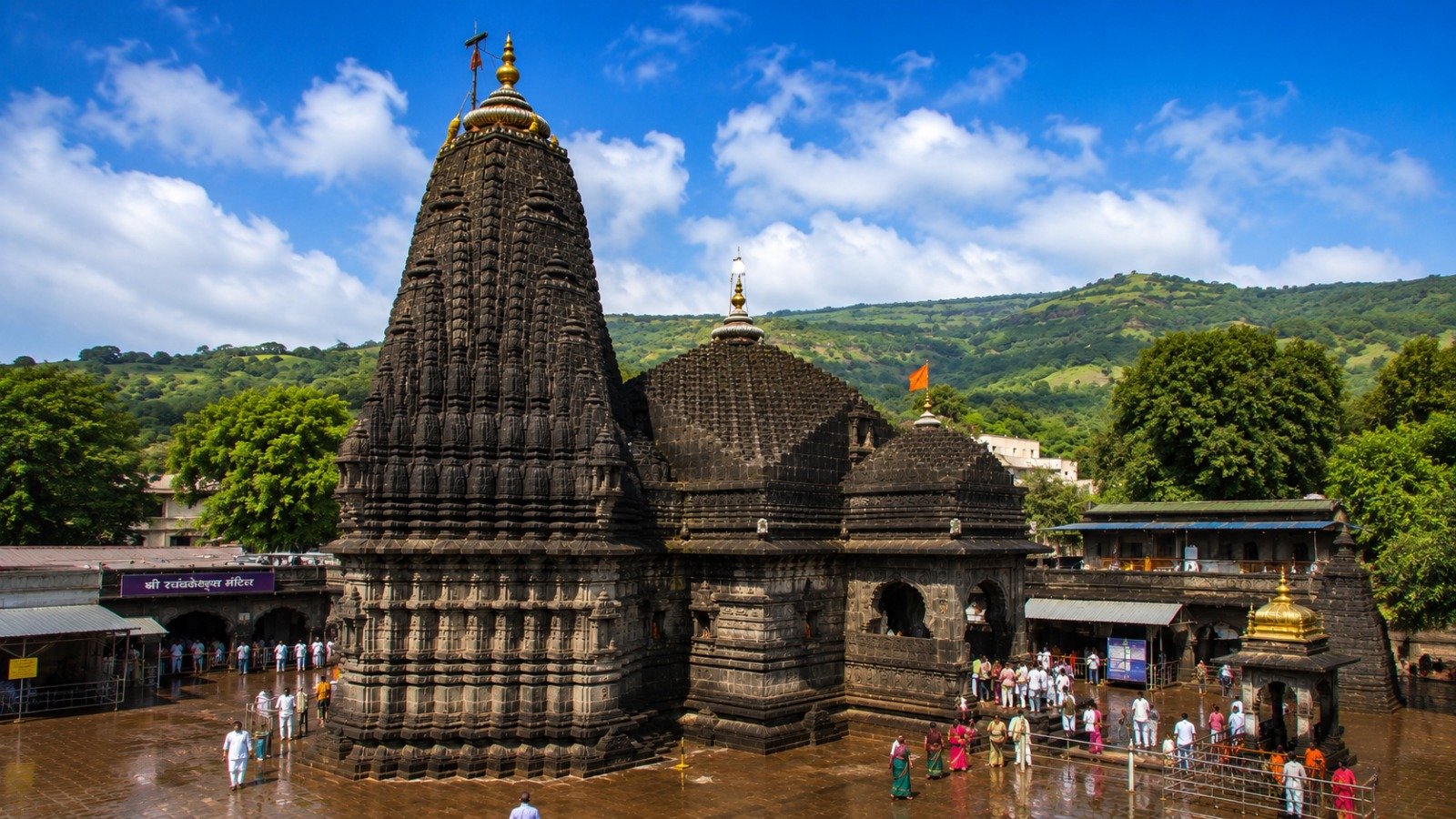
Today post breakfast, Check-out and first go for Nashik temple tour visiting Trimbakeshwar Jyotirlinga- one of the 12 Jyotirlingas, famous for its unique three-faced lingam representing Brahma-Vishnu-Mahesh, Kalaram Temple - striking black-stone Rama temple, believed to mark where Ram, Sita, and Lakshman lived during their exile, Kapaleshwar Mahadev Mandir- a Shiva temple right on Godavari's Goda Ghat, unusual for having no Nandi idol. Post tour Proceed to Chhatrapati Sambhaji Nagar (formerly known as Aurangabad)- a city in Maharashtra state in India. The city is a tourism hub, surrounded by many historical monuments, including the Ajanta Caves and Ellora Caves, which are UNESCO World Heritage Sites. On arrival, check into the hotel. Overnight in Chhatrapati Sambhaji Nagar.
Trimbakeshwar Jyotirlinga Temple timing
Trimbakeshwar Jyotirlinga Temple welcomes devotees for darshan every day between 5:30 AM and 9:00 PM. That said, the temple does close for short intervals during the day so that the premises can be cleaned and the midday rituals can be carried out, temporarily pausing general darshan during those windows
Day 11:- Grishneshwar Jyotirlinga Temple - Ellora Caves, and Sambhaji Nagar to Pune (240kms/5hrs)
After breakfast, check out from the hotel and begin your Nashik temple tour. Visit the revered Trimbakeshwar Jyotirlinga, one of the twelve sacred Jyotirlingas of Lord Shiva, known for its distinctive three-faced lingam symbolizing Brahma, Vishnu, and Mahesh. Continue to the Kalaram Temple, an ancient shrine built from black stone, believed to mark where Ram, Sita, and Lakshman stayed during their exile. Also visit Kapaleshwar Mahadev Temple, a unique Shiva temple situated near the Godavari River at Goda Ghat, notable for the absence of a Nandi idol. After completing the temple visits, proceed towards Chhatrapati Sambhaji Nagar (formerly Aurangabad), a prominent city in Maharashtra known for its rich historical and cultural heritage. The region is famous for housing UNESCO World Heritage Sites such as the Ajanta and Ellora Caves. Upon arrival, check into your hotel and relax. Overnight stay in Chhatrapati Sambhaji Nagar.
Grishneshwar Jyotirlinga Temple timings
The Grishneshwar Jyotirlinga Temple is generally open daily from 5:30 AM to 9:30 PM. Darshan continues throughout the day without any gaps, apart from a brief pause around midday for the Bhog Aarti, one of the temple's regular rituals.
Day 12:- Pune to Bhimashankar Jyotirlinga to Pune (125kms/3-4hrs each way)
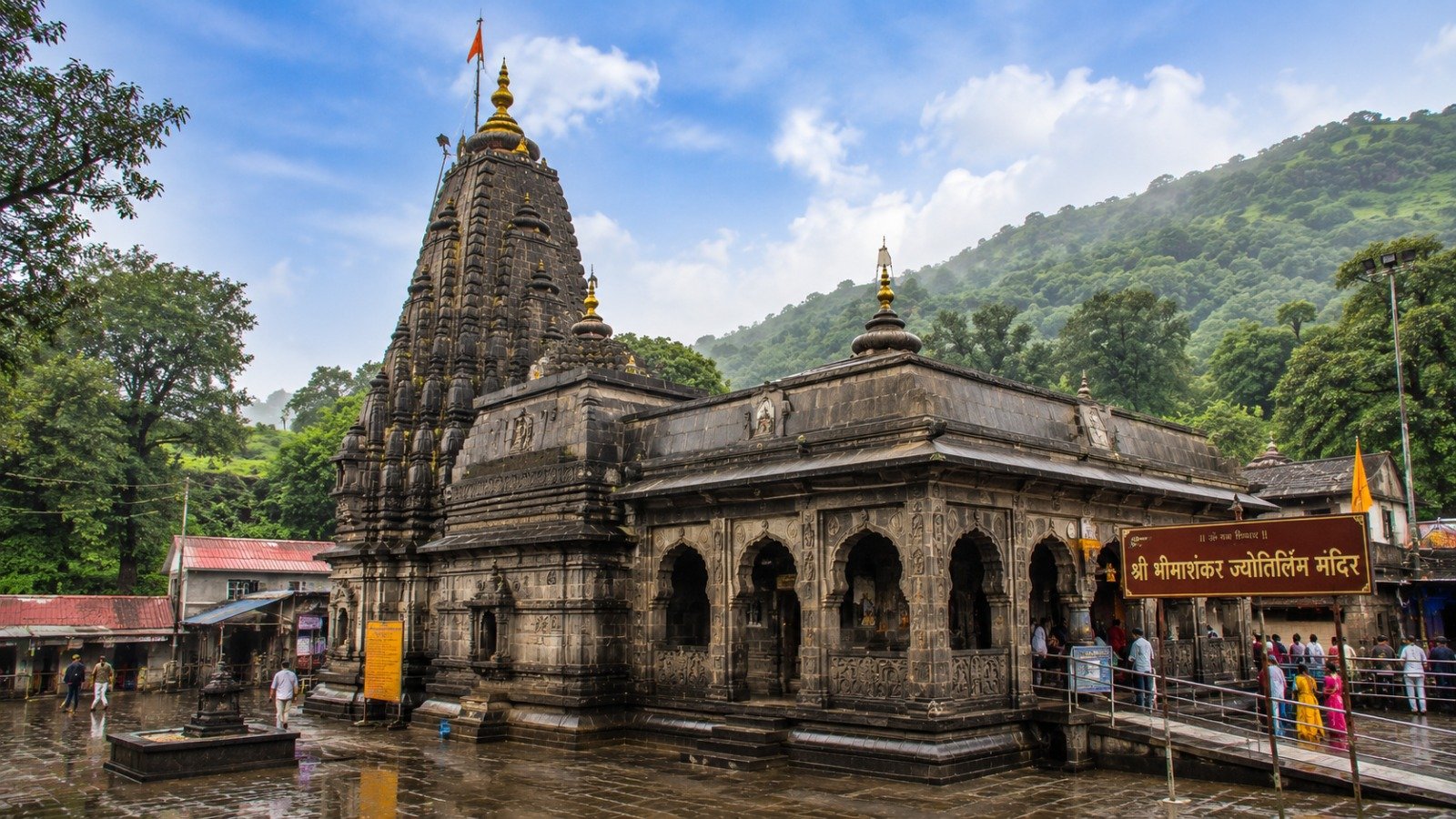
After breakfast go for darshan at Bhimashankar temple, one of the twelve Jyotirlinga shrines dedicated to Lord Shiva. It is located in the Sahyadri hills near Pune and It is considered one of the holiest Shiva temples in India, believed to be the site where Shiva took the form of the "Bhima" (giant) Shiva Linga. it's associated with Shiva's defeat of the demon Tripurasura, and the sweat/energy released during this battle is said to have formed the Bhima river, which originates near this temple. After darshan, return to Pune. Overnight in Pune.
Bhimashankar Jyotirlinga Temple timings
The Bhimashankar Jyotirlinga Temple welcomes visitors daily from 4:30 AM to 9:30 PM. Devotees can experience the early morning Kakada Aarti along with the Abhishekam rituals performed each day. It's worth noting that exact darshan timings can vary slightly based on the specific rituals scheduled for that day, so visitors may want to confirm timings before planning their visit.
Day 13:- Pune to Indore (by Flight at own expense)|Indore to Ujjain (60 km/2 hrs)
After breakfast, check out from the hotel and proceed to Pune Airport to board your flight to Indore, widely known as the commercial hub of Madhya Pradesh. Upon arrival, continue your journey to Ujjain, one of India’s most revered spiritual cities, situated on the banks of the sacred Shipra River. The city is famous for the Mahakaleshwar Jyotirlinga, one of the twelve sacred shrines dedicated to Lord Shiva, and for hosting the grand Simhastha Kumbh Mela every twelve years. Upon reaching Ujjain, check into your hotel and relax. Overnight stay in Ujjain.
Day 14:- Mahakaleshwar Jyotirlinga Temple visit- Ujjain to Omkareshwar (150km/3.5hrs) and Omkareshwar to Indore (85km/3hrs)
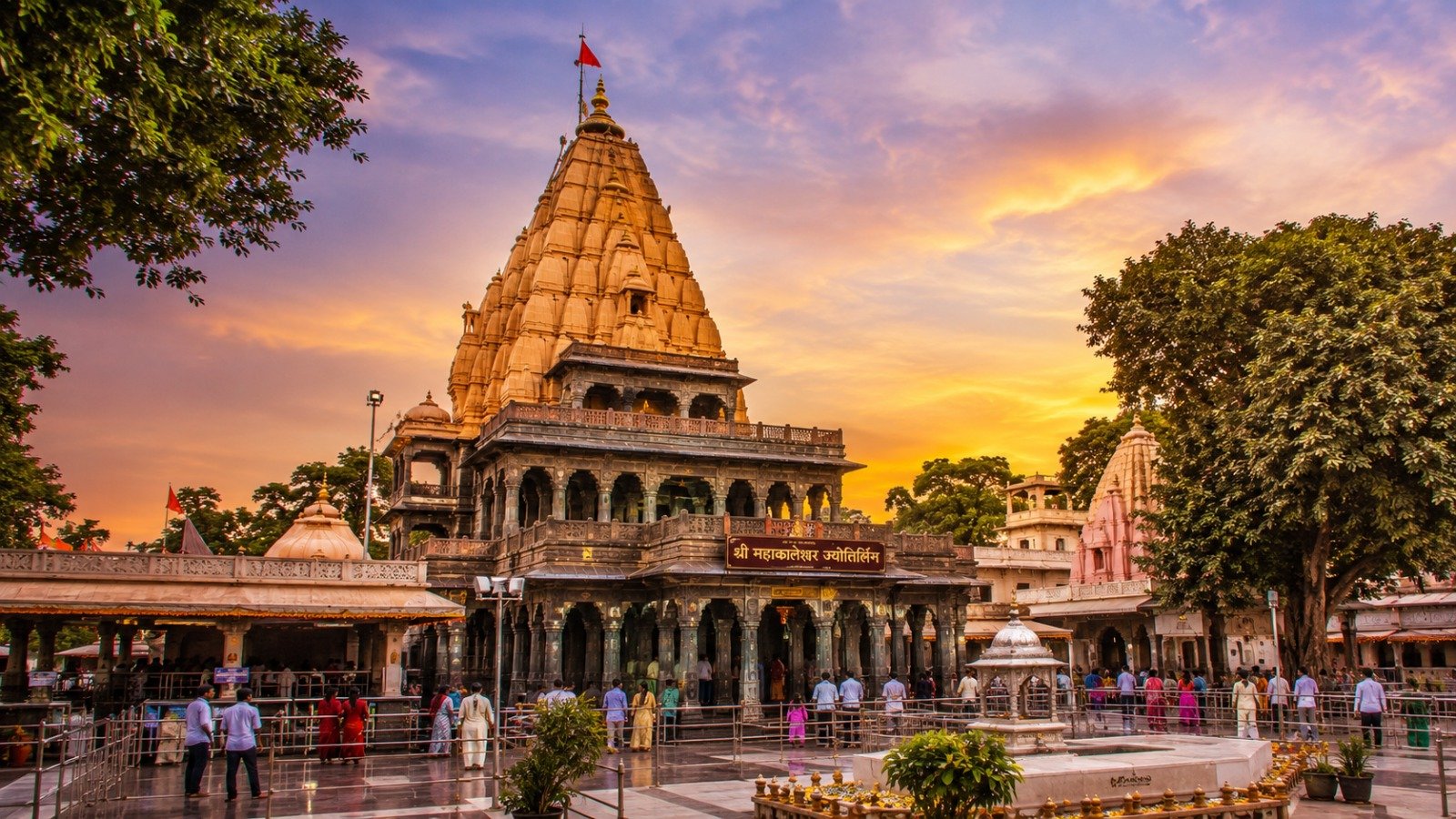
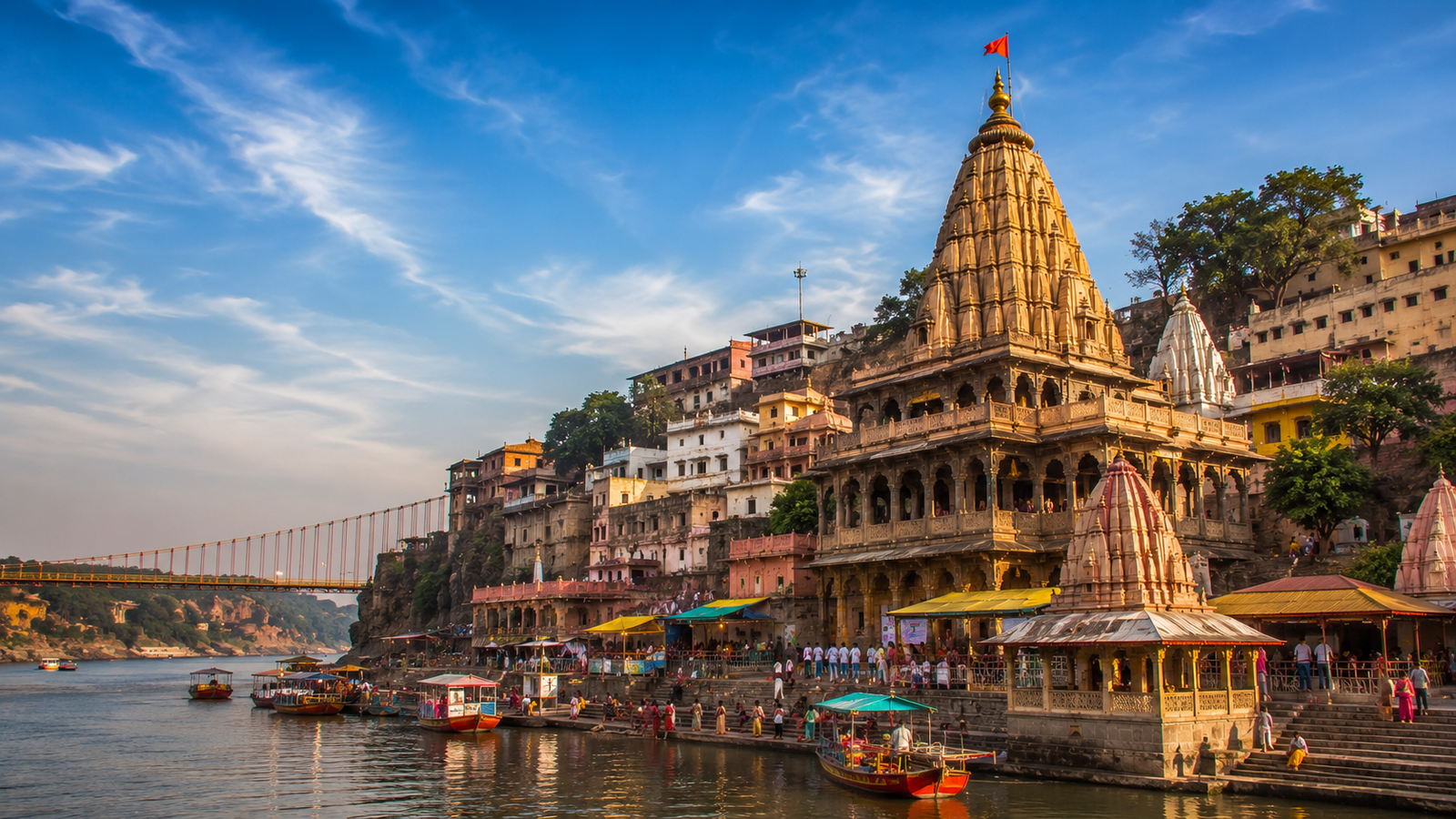
Today, have an early darshan at Mahakaleshwar Temple-one of the twelve Jyotirlingas and sacred shrines believed to be self-manifested (swayambhu) forms of Lord Shiva, considered the most sacred abodes of the deity. Post darshan return to hotel, have your breakfast, Check-out and go for Darshan at Omkareshwar Jyotirlingas-located on Mandhata Island (shaped like the Hindu "Om" symbol) in the Narmada River, in Khandwa district, Madhya Pradesh,The island is formed by the confluence of the Narmada and Kaveri rivers. It houses two temples: the Omkareshwar temple and the Amareshwar temple. After darshan, drive to Indore. On arrival, Check-into the hotel; the rest of the day is free. Overnight in Indore.
Mahakaleshwar Jyotirlinga Temple timing
The Mahakaleshwar Jyotirlinga Temple opens its doors to worshippers as early as 4:00 AM and remains accessible until 11:00 PM each day. During these hours, the temple hosts a series of rituals and keeps its gates open for nearly the entire day, pausing only briefly for cleaning routines and select ceremonies held in the afternoon.
Omkareshwar Jyotirlinga Temple timing
The Shri Omkareshwar Jyotirlinga Temple welcomes devotees for darshan every day from 5:00 AM until 10:30 PM. Do note that darshan is briefly suspended during certain aarti and bhog (offering) rituals for example, from 12:20 PM to 1:15 PM, and once again between 9:30 PM and 10:00 PM.
Day 15:- Indore to Jamnagar/Rajkot (by Flight at own Exp)| Jamnagar/Rajkot- Dwarka
After a refreshing breakfast, check out and drop at Indore airport to board a flight to Jamnagar/Rajkot. On arrival proceed to Dwarka, located in Gujarat, is one of India’s most revered spiritual destinations, closely associated with Lord Krishna and rich Hindu traditions. It holds immense religious significance as one of the four sacred Char Dham pilgrimage sites, alongside Badrinath, Puri, and Rameswaram. According to legend, Dwarka was the grand kingdom established by Lord Krishna after his departure from Mathura. The region is also home to the revered Nageshwar Jyotirlinga, one of the twelve Jyotirlingas dedicated to Lord Shiva, situated a short distance from Dwarka. On arrival, Transfer to the hotel. Overnight in Dwarka.
Day 16:- Dwarka Temple Darshan with Nageshwar Jyotirlinga and Bet Dwarka
Today, after breakfast, first go for darshan at Dwarkadhish Temple, dedicated to Lord Krishna in his form as “Dwarkadhish,” the King of Dwarka. This magnificent five-story temple showcases intricate architectural carvings and stands as a testament to ancient craftsmanship. Believed to have origins dating back over 2,000 years, the temple has been expanded and enhanced over the centuries, adding to its historical and spiritual significance. Then visit Nageshwar Jyotirlinga is one of the twelve sacred Jyotirlingas dedicated to Lord Shiva. According to legend, a demon named Daruka once imprisoned a devoted follower of Shiva named Supriya. Despite being held captive, Supriya continued his unwavering worship. Moved by his devotion, Lord Shiva appeared, vanquished the demon, and manifested as Nageshwar (snake) symbolizing protection and divine power. The temple is also renowned for its impressive 25-meter (82-foot) statue of Lord Shiva seated in a serene meditative posture, attracting pilgrims and visitors from across the country. Also visit Bet Dwarka- a sacred island believed to have been the actual residence of Lord Krishna, accessible by road now. The Rukmini Devi Temple is devoted to Goddess Rukmini, the principal consort of Lord Krishna, and holds great religious significance for devotees. Another important site is Gomti Ghat, a sacred bathing place where the Gomti River meets the Arabian Sea. Pilgrims visit this holy confluence to perform rituals and seek spiritual purification. After completing the darshan, return to the hotel for an overnight stay in Dwarka.
Dwarkadhish Temple timing
The Dwarkadhish Temple in Dwarka, Gujarat, welcomes devotees for darshan every day, split into two sessions. Morning hours run from 6:30 AM to 1:00 PM, while evening darshan takes place from 5:00 PM to 9:30 PM. The temple remains shut between 1:00 PM and 5:00 PM each afternoon, as this period is set aside for the deity's ritual rest.
Nageshwar Jyotirlinga Temple timing
The Nageshwar Jyotirlinga Temple in Gujarat welcomes visitors every day from 6:00 AM to 12:30 PM and again from 5:00 PM to 9:30 PM. It shuts down entirely during the afternoon hours so that cleaning and ritual observances for the deity can take place. For those hoping to avoid crowds and enjoy a quicker visit, arriving early between 6:00 AM and 8:30 AM is the best option.
Day 17:- Dwarka to Somnath (240kms/4hrs)| Somnath temple dharshan
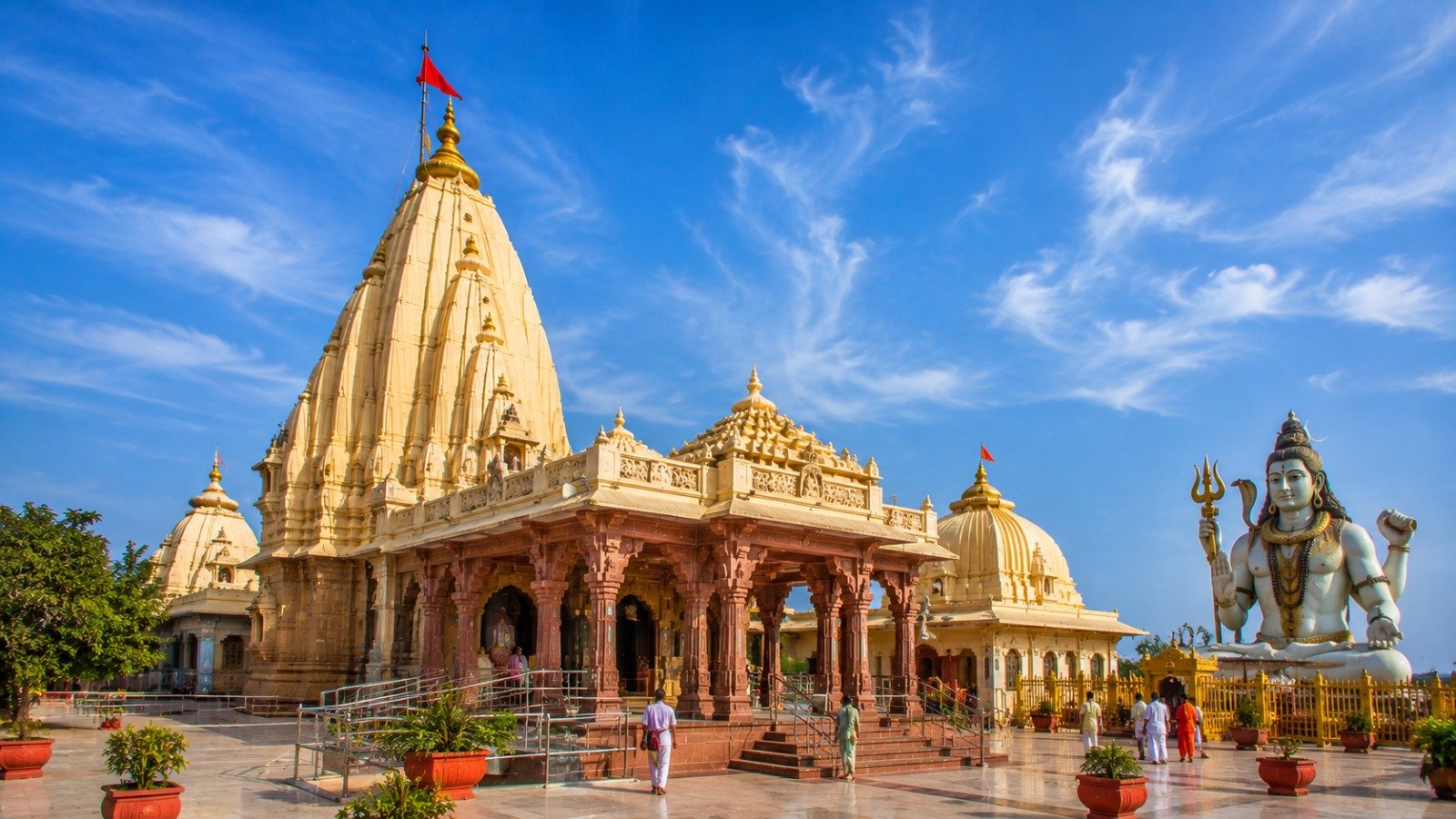
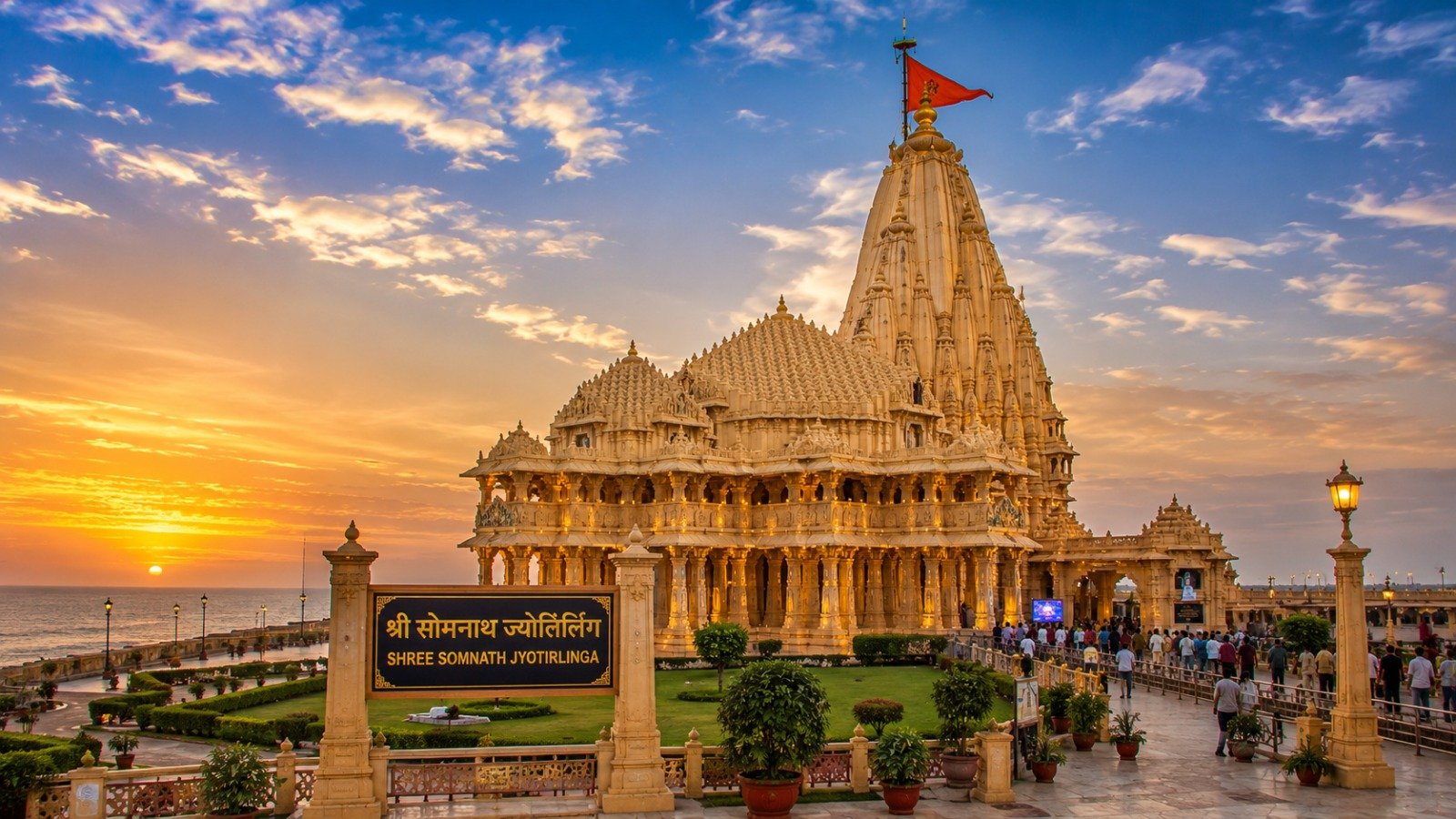
Today after breakfast, Check-out and proceed to Somnath, a revered spiritual city in Gujarat, is beautifully situated along the western coast of India by the Arabian Sea. It is known for the iconic Somnath Temple, one of the twelve sacred Jyotirlingas dedicated to Lord Shiva. Upon arrival, check in to your hotel and later proceed for darshan at the Somnath Temple. Considered one of the oldest temples in India, it finds mention in ancient scriptures like the Rigveda. The temple has a remarkable history, having been destroyed and rebuilt multiple times over centuries. The present structure was reconstructed after India’s independence under the leadership of Sardar Vallabhbhai Patel and was completed in 1951. It is an excellent example of Chalukya-style architecture. In addition to the temple visit, explore nearby sacred and scenic attractions. Visit Triveni Sangam, the holy confluence of three rivers—Hiran, Kapila, and the mythical Saraswati—believed to cleanse one’s sins. Continue to Bhalka Tirth, the sacred site associated with Lord Krishna, where he is believed to have left his mortal body. You can also spend peaceful moments at Somnath Beach, a serene and picturesque spot popular among pilgrims and tourists alike. After the tour, return to the hotel. Overnight in Somnath.
Somnath Jyotirlinga Temple timing
The Somnath Jyotirlinga Temple, located in Prabhas Patan, Gujarat, welcomes visitors every day from 6:00 AM until 10:00 PM. Devotees can take part in general darshan during two time blocks: from early morning at 6:00 AM through midday at 12:00 PM, and again in the evening from 4:00 PM to 9:30 PM. The temple also conducts Aarti ceremonies three times daily, at 7:00 AM, 12:00 PM, and 7:00 PM.
Day 18:- Somnath to Ahmedabad (430kms/8hrs)
Early morning, you may again go for Darshan and aarti at Somnath temple. After breakfast, Check-out and proceed to Ahmedabad, which is renowned for its rich heritage and cultural significance, proudly holding the title of India first UNESCO World Heritage City. Known as the “Manchester of India,” it has a thriving textile industry that has shaped its identity over the years. The city is also famous as the home of Mahatma Gandhi’s Sabarmati Ashram, along with its vibrant street food scene and beautifully preserved traditional arts and crafts. Upon, arrival after the long road journey, check into the hotel. Overnight in Ahmedabad.
Day 19:- Ahmedabad to Hyderabad (by flight at own expense)| Hyderabad airport to Srisailam/Shri Mallikarjuna Jyotirlinga Temple (210kms/5hrs)
After breakfast, Check-out and drop at Ahmedabad airport to board a flight to Hyderbad- Nicknamed the "City of Pearls," it seamlessly combines its rich heritage with a dynamic IT and biotech industry. On arrival, meet greet then proceed to Srisailam- a famous temple town in Andhra Pradesh, Known for the ancient Sri Mallikarjuna Swamy Temple-one of the twelve sacred Jyotirlingas of Lord Shiva and also among the eighteen revered Shakti Peethas dedicated to Goddess Parvati. Nestled amidst the scenic Nallamala Hills, the town offers a perfect blend of spiritual significance and natural beauty. On arrival, check into the hotel. Overnight in Srisailam.
Day 20:- Early morning Shri Mallikarjuna Jyotirlinga Temple|Srisailam to Hyderabad (210kms/5hrs)
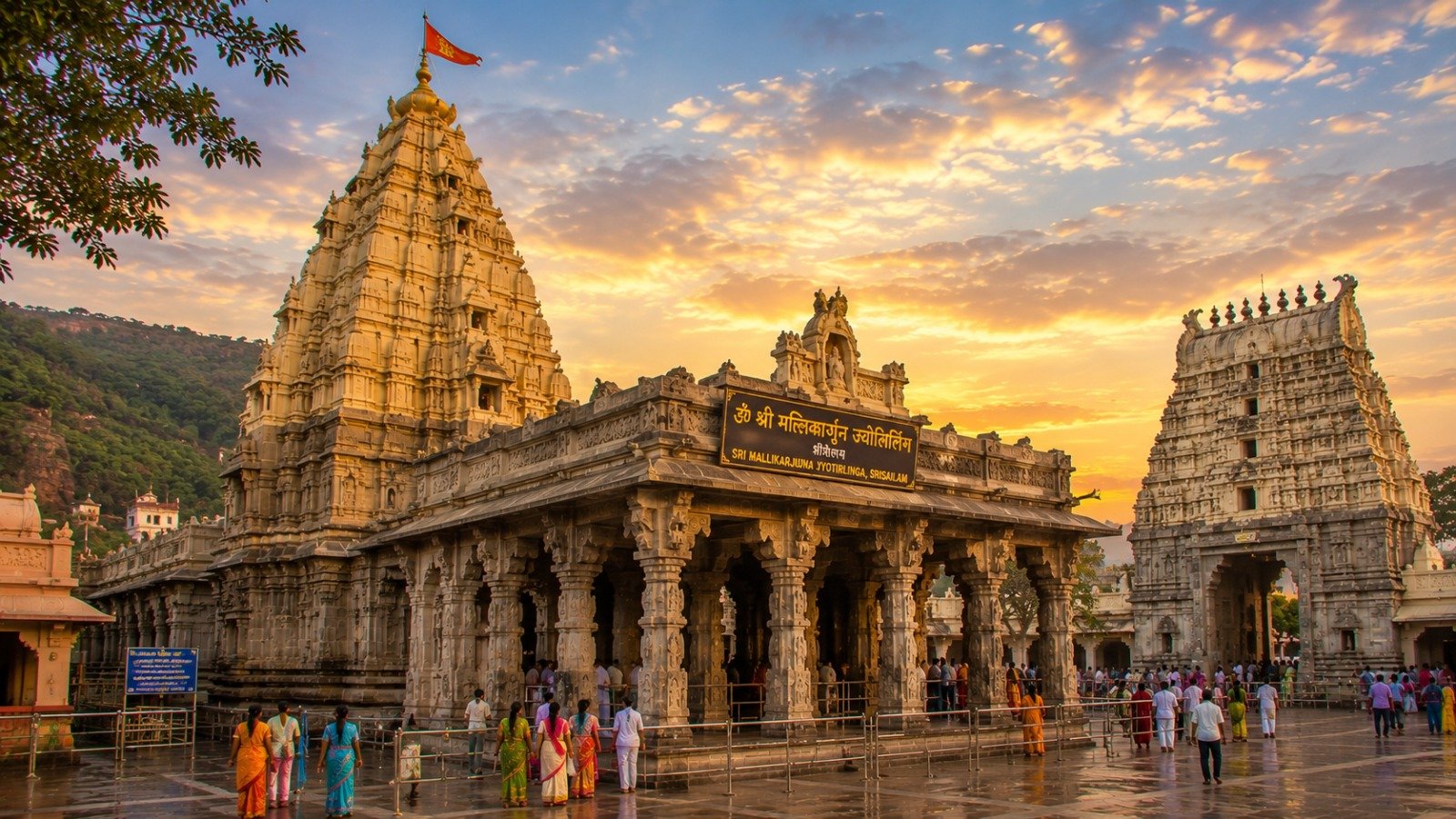
Go for Early morning darshan at Sri Bhramaramba Mallikarjuna Swamy Temple - one of the twelve sacred Jyotirlingas dedicated to Lord Shiva and also ranks among the eighteen revered Shakti Peethas of Goddess Parvati. The temple uniquely enshrines both Mallikarjuna (Shiva) and Bhramaramba (Shakti), making it a rare and highly significant site in Hindu pilgrimage. This dual spiritual importance attracts devotees seeking blessings of both divine energies in one sacred destination. After darshan, return to the hotel, relax have your breakfast, then check-out and proceed to Hyderabad which is joint capital for Andhra Pradesh and Telangana. Overnight in Hyderbad.
Mallikarjuna Jyotirlinga temple timing
The Mallikarjuna Jyotirlinga temple in Srisailam typically remains open to visitors from 4:30 in the morning until 10:00 at night. Regular darshan hours are split into two sessions: 6:00 AM to 1:00 PM, and then 3:00 PM to 10:00 PM. Throughout the day, the temple may close briefly for cleaning, and specific puja schedules can differ, so it's worth checking current timings before you visit.
Day 21:- Hyderabad to Madurai (By flight at own Expense)| Madurai to Rameswaram (180kms/3-4hrs)
Post breakfast, complete your check-out and drop at Hyderabad airport to board a flight to Madurai. Madurai -Known as the cultural capital of Tamil Nadu, It is celebrated worldwide for the magnificent Meenakshi Amman Temple. On arrival, you will be picked up, and travel to Rameswaram- is one of India’s most sacred Hindu pilgrimage destinations, revered both as a key site in the Char Dham Yatra and as one of the twelve Jyotirlingas of Lord Shiva. Located on Pamban Island in Tamil Nadu, the town is deeply connected to the legend of Lord Rama, who is believed to have built the Rama Setu-a floating bridge from this very place to Lanka in order to rescue Sita. On arrival, Check into the hotel. Overnight in Rameswaram.
Day 22:- Temple Darshan at Rameswaram and Rameswaram to Madurai (180kms/3-4hrs)
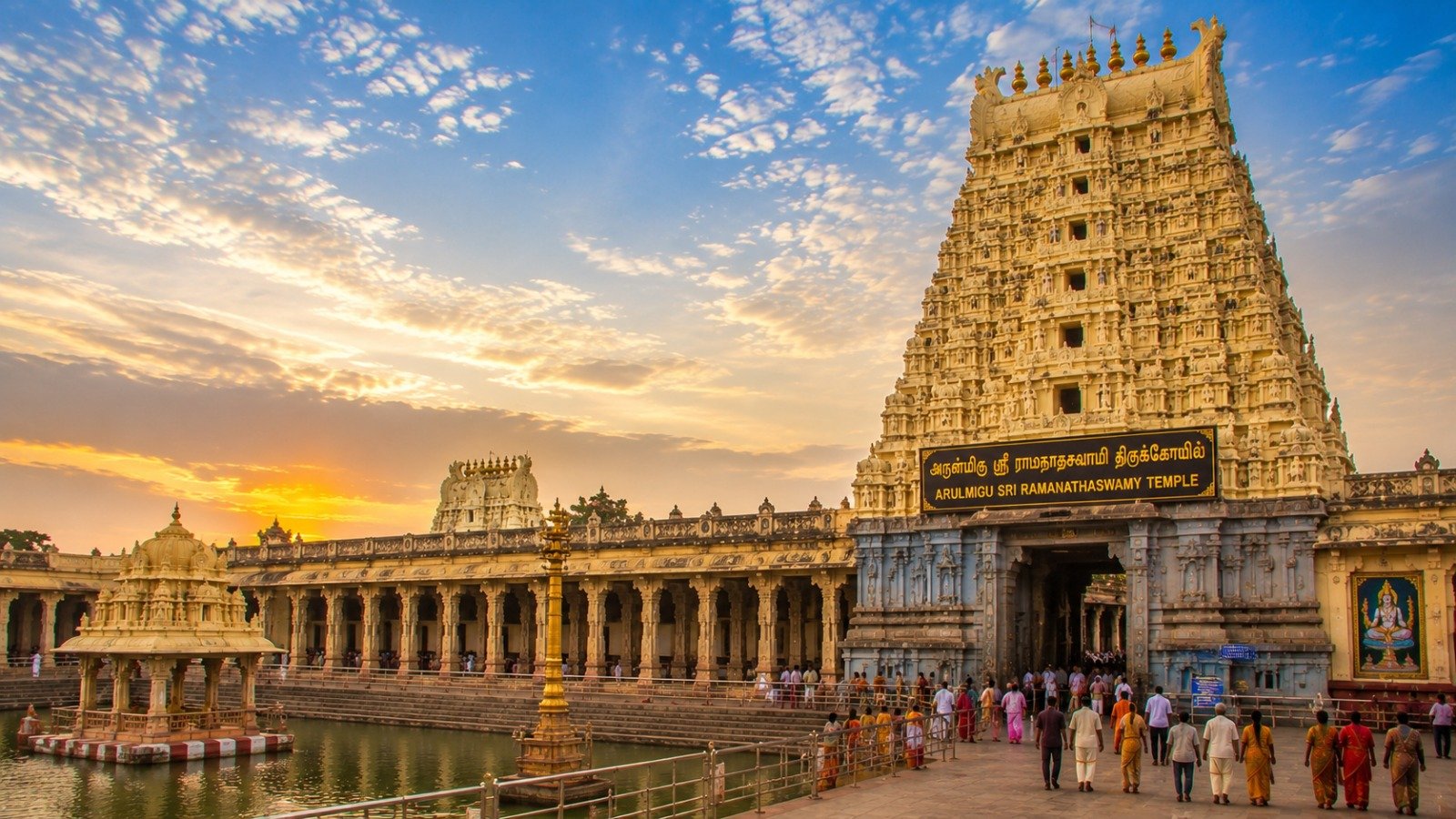
After breakfast, check out from the hotel and begin your day by visiting the sacred Sri Ramanathaswamy Temple, one of the twelve revered Jyotirlinga shrines dedicated to Lord Shiva and an important part of the Char Dham pilgrimage circuit, along with Badrinath, Puri, and Dwarka. The temple is celebrated for its remarkable architecture, especially its grand corridors- the longest among all Hindu temples-stretching nearly 3,850 feet and lined with around 1,200 beautifully carved pillars. Next, proceed to Agni Theertham, a serene seafront spot located near the temple where pilgrims traditionally take a holy dip before offering prayers. Continue your journey to Dhanushkodi, a deserted town at the southern tip of the island, which was destroyed by a powerful cyclone in 1964. Today, it is known for its unique landscape and the mesmerizing confluence of the Bay of Bengal and the Indian Ocean. En route, witness the iconic Pamban Bridge, India’s first sea bridge, which connects Rameswaram Island to the mainland and offers breathtaking views of the surrounding waters. After completing the sightseeing tour, you will be transferred to Madurai Airport or Railway Station for your onward journey. Return home carrying divine blessings and unforgettable memories from one of the most sacred spiritual experiences of a lifetime.
Sri Ramanathaswamy Jyotirlinga temple timing
Sri Ramanathaswamy Temple welcomes visitors every day between 5:00 AM and 1:00 PM, then again from 3:00 PM until 9:00 PM. For those wishing to take part in the ritual bathing at the temple's 22 sacred wells, this is possible from 5:30 AM to 12:30 PM in the morning session, and from 3:00 PM to 7:00 PM in the evening session. Devotees hoping to view the Spatika Lingam should plan to arrive early, as this darshan is only available during a one-hour window from 5:00 AM to 6:00 AM.

.jpeg)


.jpeg)