

Step into Bhaktapur and the last few centuries seem to fall away. There are no cars in the old city center. Wooden windows, carved by hand, line brick courtyards. Potters still shape clay on wheels in the open squares, the same way their families have for generations. Kathmandu Valley has three great Durbar Squares. Bhaktapur’s is widely considered the best-preserved of them all. This Bhaktapur travel guide covers everything you need to plan your visit. You’ll find how to get here from Kathmandu, what it costs, the best things to do, where to eat, and whether to stay overnight or visit as a day trip. Whether you’re traveling from the US, Europe, or India, the answers below are practical, plus there’s a full FAQ section for quick planning.
Quick answer: Bhaktapur is a UNESCO World Heritage city about 13 kilometers east of Kathmandu. It’s best reached by taxi or local bus in 30–45 minutes. Most travelers visit as a half-day or full-day trip from Kathmandu. An overnight stay lets you see the square at sunrise, before the crowds arrive. Entry costs NPR 1,800 for most foreign nationals and NPR 500 for SAARC nationals, including Indian citizens.
Bhaktapur at a Glance
| Country | Nepal |
| Distance from Kathmandu | 13 km (30–45 min by road) |
| Entry fee (foreigners) | NPR 1,800 ($15 USD) |
| Entry fee (SAARC/Indian nationals) | NPR 500 |
| Ideal duration | Half day to full day; overnight for the full experience |
| Best time to visit | October–November & March–April |
| Known for | Newari architecture, Nyatapola Temple, pottery, juju dhau (king curd) |
| Best for | Culture, photography, architecture lovers, slower-paced travel |
Fees are subject to change — always confirm current pricing at the ticket booth or with your tour operator before you go.
Why Visit Bhaktapur
Kathmandu gets busier and louder every year. Bhaktapur has resisted that shift more than almost anywhere else in the valley. The old city core is pedestrian-only. Building height and style are still tightly restricted, to preserve the Newari character of the place. That single rule is why Bhaktapur feels so different from Kathmandu, or even Patan, just a short drive away.
No Bhaktapur travel guide is complete without mentioning the 2015 earthquake. It damaged nearly every structure in the square, and one temple collapsed entirely. Local heritage committees have spent years rebuilding since. Most of the major temples have now been fully restored using traditional methods. Walking through Bhaktapur today, you’re seeing both the resilience of Newari craftsmanship and centuries of continuous restoration.
Best Time to Visit Bhaktapur
October to November: Clear skies and comfortable temperatures. This period also overlaps with Nepal’s major festival season, including Bisket Jatra.
March to April: Mild weather and fewer crowds than autumn. A strong choice if you want photos without too many other tourists in frame.
December to February: Cold mornings, but quiet streets and excellent light for photography.
June to September (monsoon): Rain is frequent, and the brick streets get slippery. Not ideal, though the pottery squares and covered courtyards still work fine as shelter.
How Many Days Do You Need in Bhaktapur?
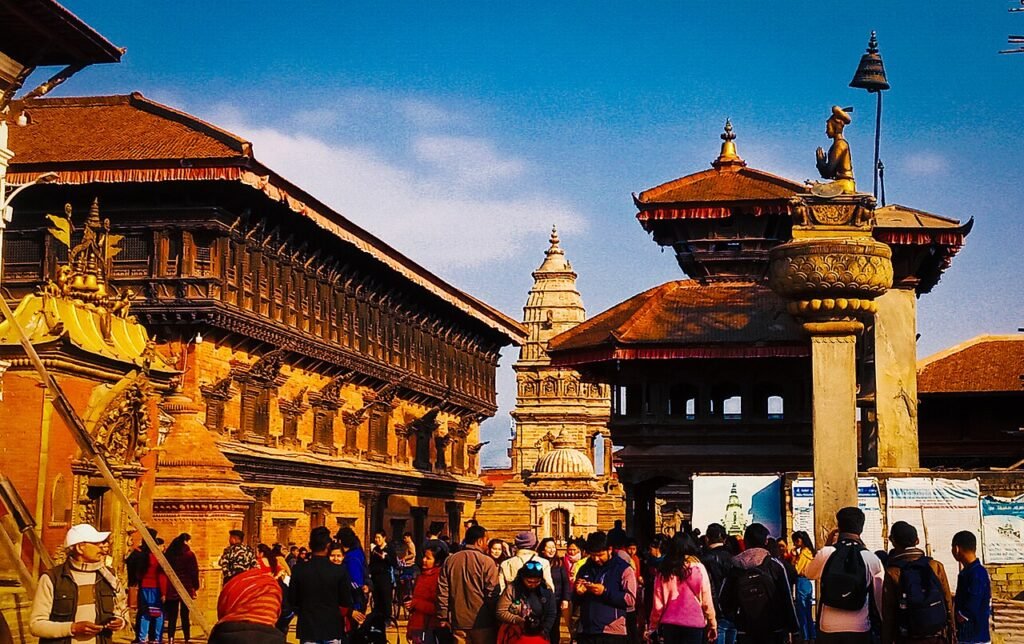
A half day covers the main square, Nyatapola Temple, and Pottery Square comfortably. A full day gives you time for the quieter back lanes and smaller temples, and lets you watch potters and wood-carvers at work without rushing.
If your schedule allows it, consider staying one night. Most day-trippers leave by early evening, and the square empties out completely after dark. Early the next morning, before the tour buses arrive from Kathmandu, Bhaktapur is close to silent. Locals sweep their doorsteps. Vendors set up for the day. The light on the temple roofs is extraordinary.
How to Get to Bhaktapur from Kathmandu
Getting between the two cities is straightforward. This is one of the most common questions in any Bhaktapur travel guide.
- Taxi: The easiest option. Expect roughly 30–45 minutes depending on traffic. Agree on the fare before you get in, or use a ride-hailing app for a fixed rate.
- Local bus: The cheapest option, running frequently from Kathmandu’s Ratna Park area to Bhaktapur. It takes closer to an hour, and can get crowded.
- Ride-hailing apps: Widely used in Kathmandu Valley. Generally the most reliable way to get a fair price without negotiating.
- Organized tour: Many travelers combine Bhaktapur with Patan or Nagarkot in one guided day trip. This removes the logistics entirely.
There’s no airport in Bhaktapur itself. All flights land at Kathmandu’s Tribhuvan International Airport, from which Bhaktapur is a straightforward onward taxi ride.
Bhaktapur Entry Fee and Travel Costs
Entry to Bhaktapur Durbar Square costs NPR 1,800 for most foreign nationals. SAARC nationals pay NPR 500, a group that includes Indian, Bangladeshi, Bhutanese, Sri Lankan, Maldivian, and Pakistani passport holders, as well as Chinese nationals. The ticket covers the entire old city. That means Taumadhi Square, Pottery Square, and Dattatreya Square, not just the main Durbar Square itself.
Staying in Bhaktapur overnight? Ask the ticket office to extend your pass. It can typically be extended at no extra cost by showing your passport, which is useful if you want a second, quieter walk through the square the next morning.
Rough daily budget for a Bhaktapur visit:
| Expense | Budget | Mid-range |
|---|---|---|
| Entry fee (foreigner) | NPR 1,800 (one-time) | NPR 1,800 (one-time) |
| Taxi from Kathmandu (one-way) | NPR 800–1,200 | Private car: NPR 2,000+ |
| Lunch | NPR 300–500 | NPR 800–1,500 |
| Juju dhau and snacks | NPR 100–200 | NPR 200–400 |
| Guide (optional, half-day) | — | NPR 1,500–2,500 |
Prices fluctuate. Treat this as a planning range rather than a fixed quote.
Top Things to Do in Bhaktapur
1. Bhaktapur Durbar Square
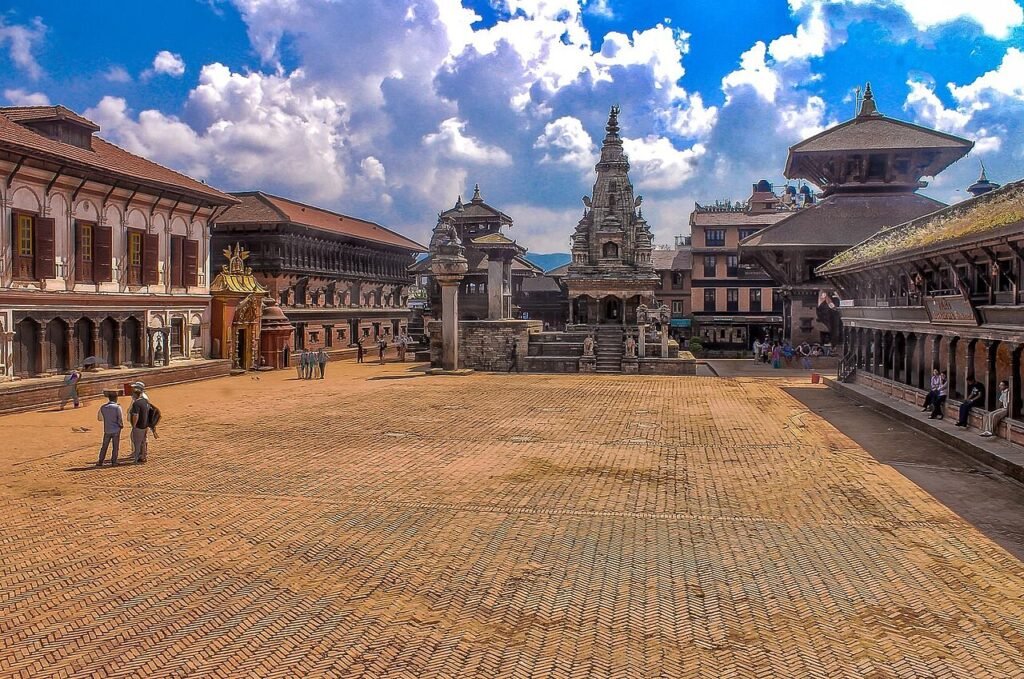
The heart of the old city, home to the 55-Window Palace, the Golden Gate, and a cluster of temples dating back centuries. Most visitors start here, and it’s worth returning to at different times of day as the light changes.
2. Nyatapola Temple
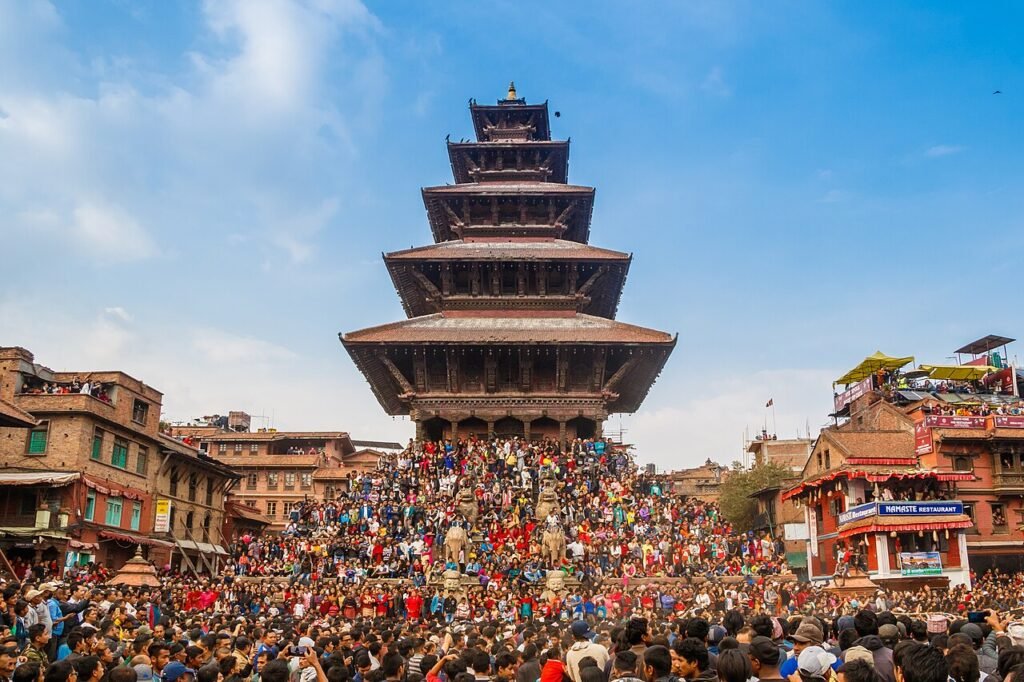
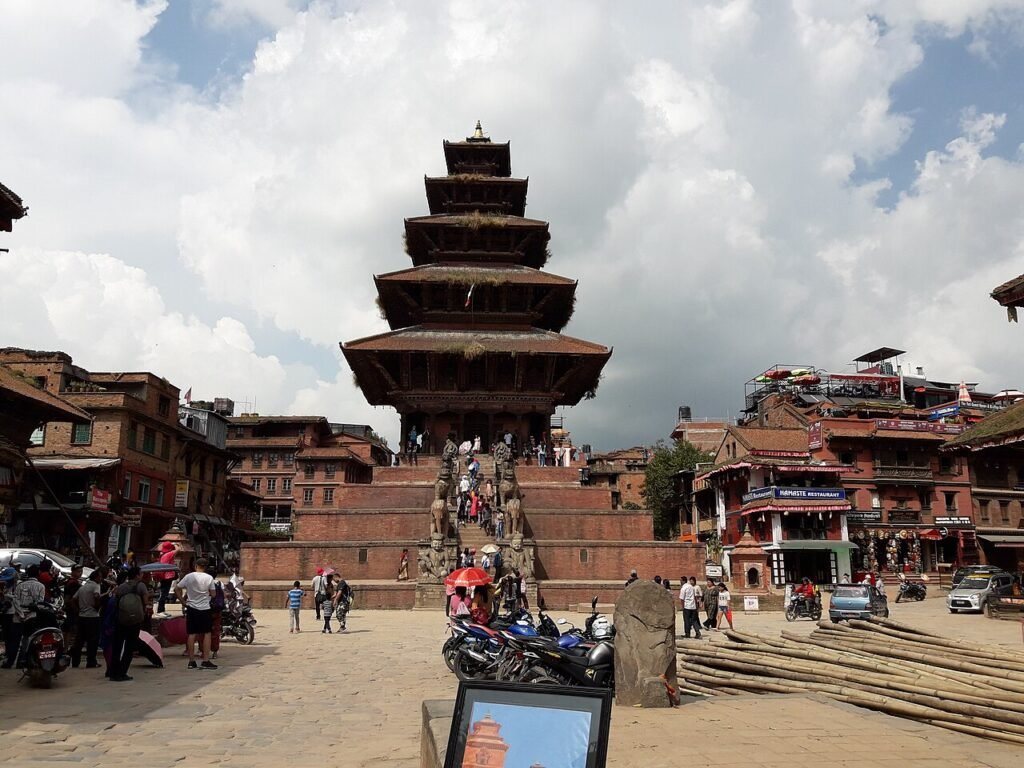
One of the tallest pagodas in Nepal, rising five stories above Taumadhi Square. It survived the 2015 earthquake with minimal damage, a testament to the original builders’ engineering. Climbing partway up the steps for a photo is a Bhaktapur rite of passage.
3. Pottery Square
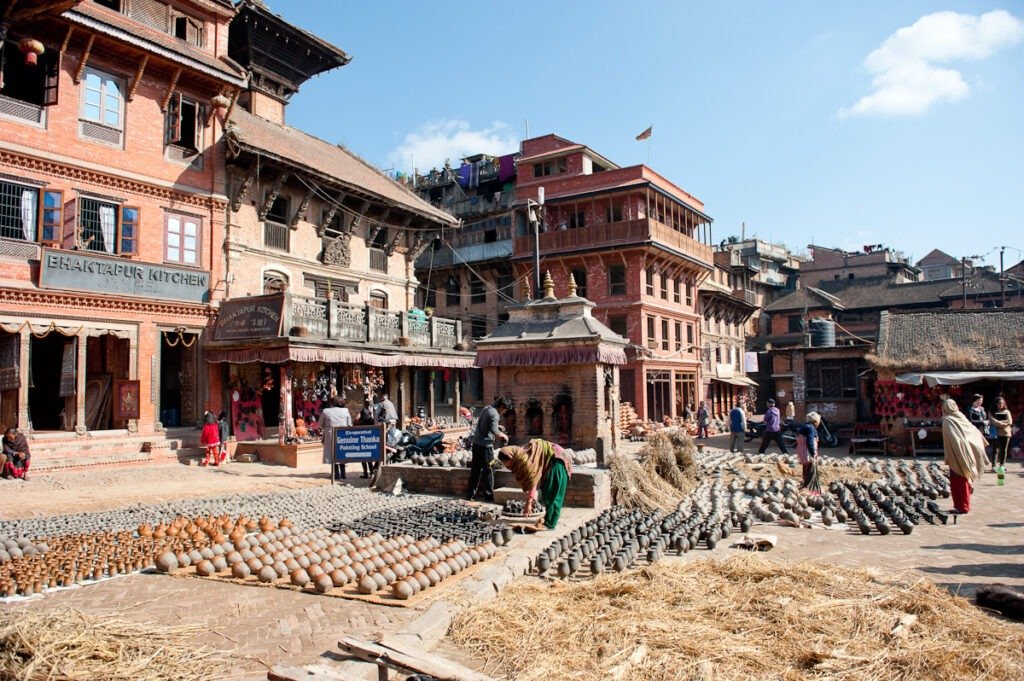
Watch potters shape clay on manual wheels, exactly as their families have for generations. Finished pieces get laid out to dry in the sun across the square. Buying a small piece directly from a potter here is one of the most authentic souvenirs you can bring home from Nepal.
4. Dattatreya Square
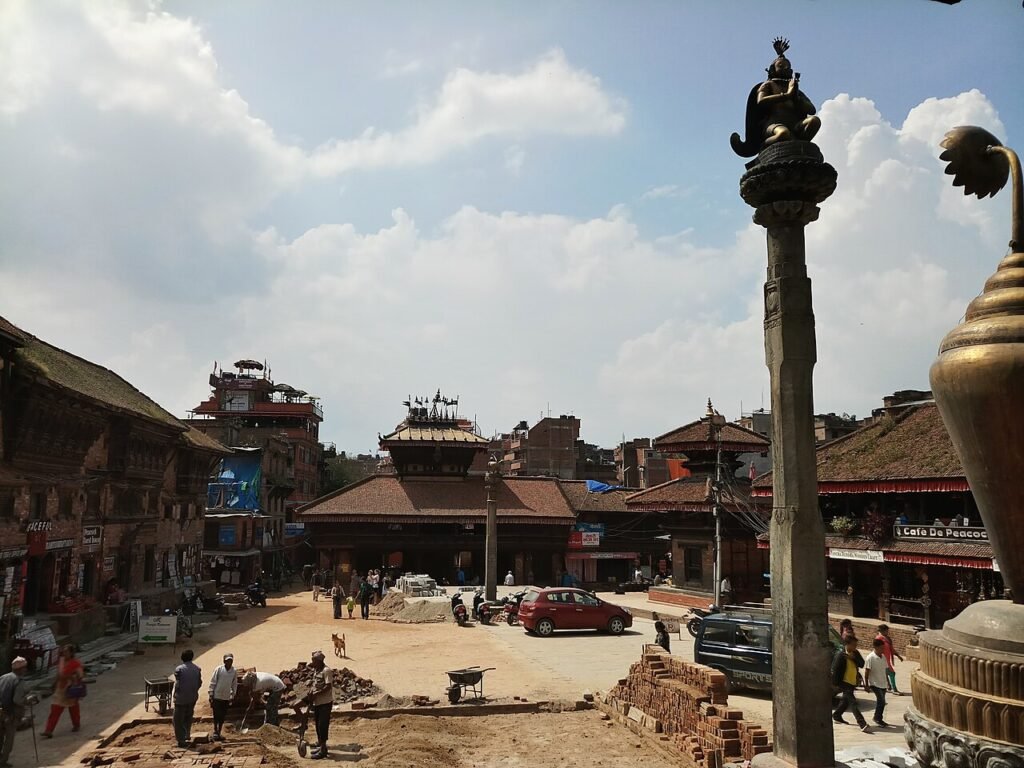
Slightly quieter than the main Durbar Square. The striking Dattatreya Temple sits here, along with the famous Peacock Window, an intricately carved wooden window considered one of the finest examples of Newari woodwork in the valley.
5. Changu Narayan Temple
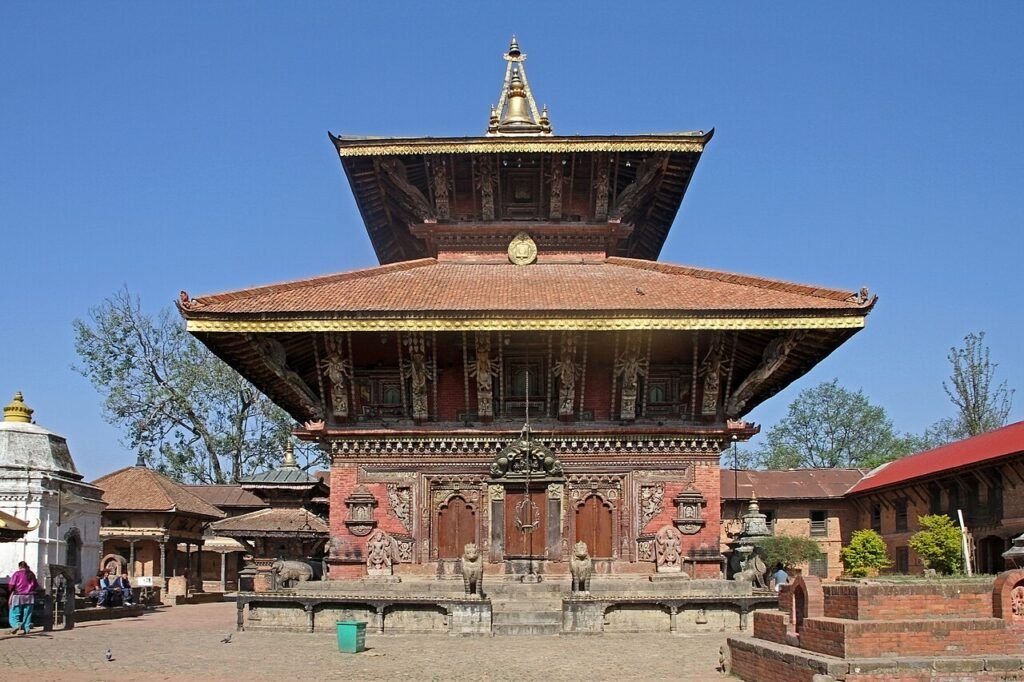
A short drive or a scenic uphill walk from Bhaktapur. This is one of the oldest Hindu temples in Nepal, dating back to the 4th century. It’s less crowded than the main square and pairs well with a half-day Bhaktapur visit if you have the time.
6. Try Juju Dhau
Bhaktapur’s signature dish isn’t a meal, it’s a dessert. Juju dhau, or “king curd,” is a rich, slightly sweet yogurt set in clay pots. It’s sold throughout the old city and worth seeking out specifically. Locals will happily point you to their favorite shop if you ask.
7. Wander the Back Lanes
Beyond the main squares, Bhaktapur’s residential lanes are where daily life actually happens. Courtyards, small shrines, and workshops fill these streets, and most don’t make it into typical photo guides. This is where the city stops feeling like a museum and starts feeling lived-in.
Where to Stay in Bhaktapur
Most travelers visit Bhaktapur as a day trip from Kathmandu, and that works perfectly well if your time is limited. An overnight stay changes the experience, though.
In Bhaktapur: A small number of heritage guesthouses sit right inside or near the old city walls, several in restored traditional Newari buildings. These fill up during peak season (October–November), so book ahead if you want a room with a square-facing view.
In Kathmandu: Prefer to stay in Kathmandu and visit Bhaktapur as a day trip instead? Thamel remains the most convenient base, with easy taxi access to Bhaktapur each morning. See our full Kathmandu travel guide for neighborhood-by-neighborhood recommendations.
What to Eat in Bhaktapur
- Juju dhau – The dish Bhaktapur is famous for. Don’t leave without trying it.
- Newari khaja set – A traditional snack platter, often including beaten rice, spiced potatoes, and grilled meat. Served on special occasions, but available in local eateries year-round.
- Chatamari – Sometimes called “Newari pizza.” A rice-flour crepe topped with egg, meat, or vegetables.
- Street snacks in Pottery Square – Look for vendors selling roasted corn, fried snacks, and tea in small clay cups, meant to be smashed on the ground after use.
Sample Bhaktapur Itinerary (From This Bhaktapur Travel Guide)
Half-day trip from Kathmandu: Depart mid-morning. Explore Bhaktapur Durbar Square and Nyatapola Temple, have lunch and try juju dhau, then browse Pottery Square before returning to Kathmandu by early evening.
Full-day trip: Add Dattatreya Square and a walk through the residential back lanes in the afternoon. Extend to Changu Narayan Temple if you have transport arranged.
Overnight stay: Arrive in the afternoon and explore before sunset. Stay in a heritage guesthouse, then walk the empty square at sunrise, before the day-trippers arrive from Kathmandu.
Bhaktapur for Indian Travelers
Indian citizens don’t need a visa to enter Nepal. A valid passport or voter ID is sufficient at the border or airport. Once in Nepal, Indian nationals pay the reduced SAARC entry rate of NPR 500 at Bhaktapur, rather than the foreigner rate. Combine that with direct flights from Delhi, Mumbai, Kolkata, Varanasi, and Bengaluru into Kathmandu, and Nepal becomes one of the simplest, most affordable international trips available to Indian travelers. Bhaktapur fits easily into even a short 4–5 day Kathmandu Valley itinerary.
Is Bhaktapur Safe?
Bhaktapur is generally very safe, arguably more so than parts of central Kathmandu, thanks to its pedestrian-only core and lower traffic. Normal precautions still apply. Watch your belongings during crowded festival periods, and wear comfortable shoes — the old city’s brick streets are uneven and can be slippery after rain.
Frequently Asked Questions | Bhaktapur Travel Guide
A: About 13 kilometers, roughly 30–45 minutes by taxi depending on traffic.
A: Yes. Bhaktapur is far better preserved, largely traffic-free, and has a distinct, quieter atmosphere that many travelers prefer to Kathmandu’s busier old city.
A: NPR 1,800 for most foreign nationals and NPR 500 for SAARC nationals, including Indian citizens. Always confirm current rates before you go, since fees can change.
A: Yes, and most travelers do. A half day covers the highlights; a full day allows a more relaxed pace.
A: No. Indian citizens can enter Nepal without a visa, using a valid passport or voter ID.
A: A rich, sweetened yogurt native to Bhaktapur, served in clay pots. It’s considered a must-try local specialty.
A: One full day is enough to see the major sites comfortably. An overnight stay is only worth it if you want the square to yourself at sunrise.
Planning Your Trip
This Bhaktapur travel guide should give you what you need, whether you’re planning a quick half-day stop or a slower overnight stay. Bhaktapur rewards travelers who slow down. Even a few extra hours here, wandering past a pottery wheel or a carved window you weren’t specifically looking for, tend to be the ones people remember most.
If you’d rather have the logistics handled, Ghum India Ghum builds custom Nepal and India itineraries for travelers from the US, Europe, and India, with on-the-ground support throughout your trip. We also have offices in Milan and the USA, so you get direct, time-zone-friendly support before you go.
Planning to combine Bhaktapur with the rest of Kathmandu Valley, or add India to your trip? Check out our Golden Triangle Tour with Nepal, combining Delhi, Agra, and Jaipur with Kathmandu Valley in one seamless itinerary. Get in touch and we’ll help you build the right route for your time and interests.
