
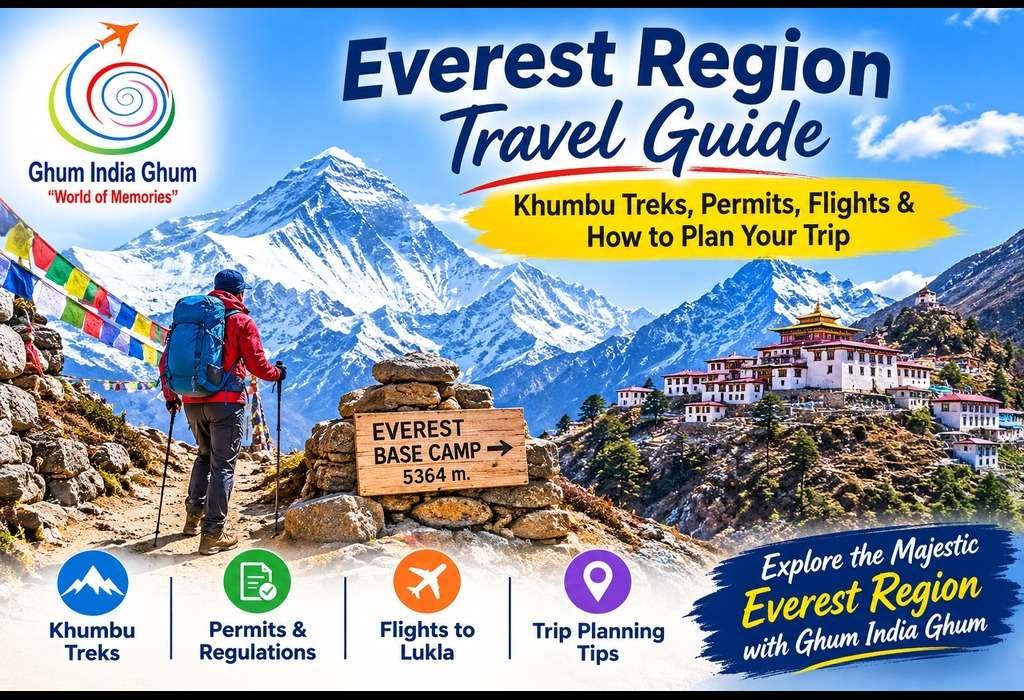

There’s a moment on every Everest region trek when the cloud lifts. You’ve been climbing through rhododendron forest and crossing swaying suspension bridges. Then the Himalayas appear all at once, with Ama Dablam, Lhotse, and the pyramid of Everest itself. Most travelers never forget it.
The Everest region, known locally as Khumbu, is home to the world’s highest mountain, 8,848.86 meters above sea level. It’s also home to Sherpa villages, Buddhist monasteries, and some of the most famous trekking trails on Earth. This Everest region travel guide covers how to plan a trip: your options, the best time to go, how to reach Lukla, permits and costs, and what to expect.
You don’t need to be an elite trekker. Some visitors spend a week on a gentle trek. Others take a one-hour scenic flight. A few go all the way to Everest Base Camp. Whatever you choose, the details below will help you plan with open eyes.
Quick answer: The Everest region sits in Nepal’s Solukhumbu district. Most visitors fly from Kathmandu to Lukla (2,860 m), then trek. The classic Everest Base Camp trek takes 12–14 days in total. A gentler Everest View trek takes 6–8 days, and a scenic flight over Everest takes about an hour. The best seasons are March to May and September to November. Two permits are required, and your travel insurance must cover altitude and helicopter evacuation.
Everest Region at a Glance
| Location | Solukhumbu district, eastern Nepal |
| UNESCO status | Sagarmatha National Park, World Heritage Site since 1979 |
| Highest point | Mount Everest, 8,848.86 m |
| Gateway | Lukla, 2,860 m |
| Everest Base Camp | 5,364 m |
| Best seasons | March to May and September to November |
| Typical EBC trek | 12–14 days from Kathmandu |
| Main permits | Sagarmatha National Park and Khumbu Pasang Lhamu local permit |
Why Visit the Everest Region
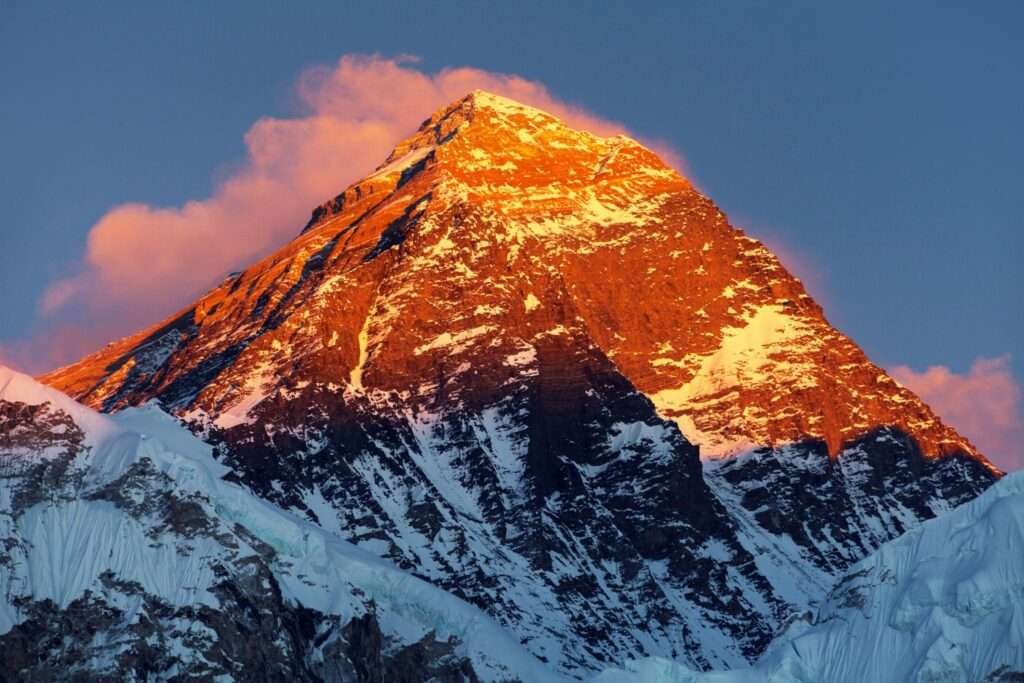
Nowhere else puts you this close to the world’s highest peaks without technical climbing. The trails pass through Sherpa villages, past mani stones and prayer flags, and beside glacial rivers.
The region is also a cultural destination. Tengboche Monastery, the area’s best-known Buddhist monastery, sits in a remarkable setting with Everest in view. Namche Bazaar, the main Sherpa trading town, is a lively place to rest and acclimatize.
Ways to Experience the Everest Region
You don’t have to trek to Base Camp. Choose the option that fits your time, fitness, and goals.
| Option | Time | Highest point | Best for |
|---|---|---|---|
| Everest scenic flight | About 1 hour | In the air | Short on time, no trekking |
| Everest View trek | 6–8 days | About 3,880 m | First-timers, gentler trek |
| Everest Base Camp trek | 12–14 days | 5,364 m (Kala Patthar about 5,550 m) | Fit, determined trekkers |
| Gokyo Lakes trek | Longer than EBC | About 4,700–5,000 m | Fewer crowds, turquoise lakes |
| Three Passes trek | Demanding | Passes above 5,300 m | Experienced high-altitude trekkers |
Everest View Trek
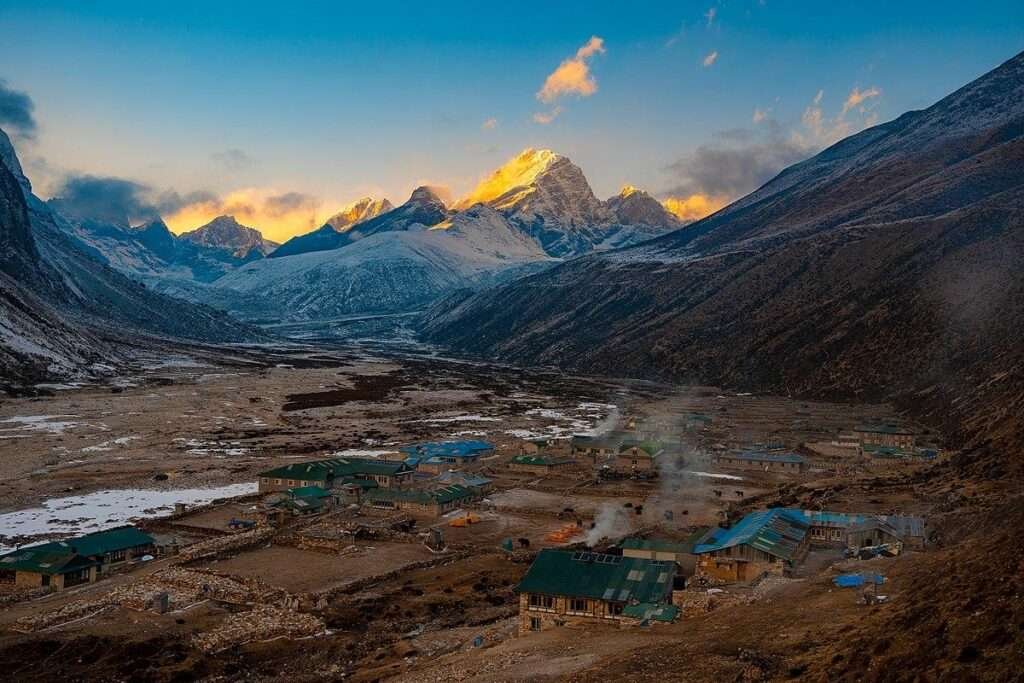
This is the best choice for a first Himalayan trek. You fly to Lukla, walk to Namche Bazaar, and spend a full day acclimatizing with a hike to the Everest View Hotel at about 3,880 m. Most itineraries continue to Tengboche, at about 3,860 m, before returning. You don’t sleep higher than that, which keeps altitude manageable.
Everest Base Camp Trek
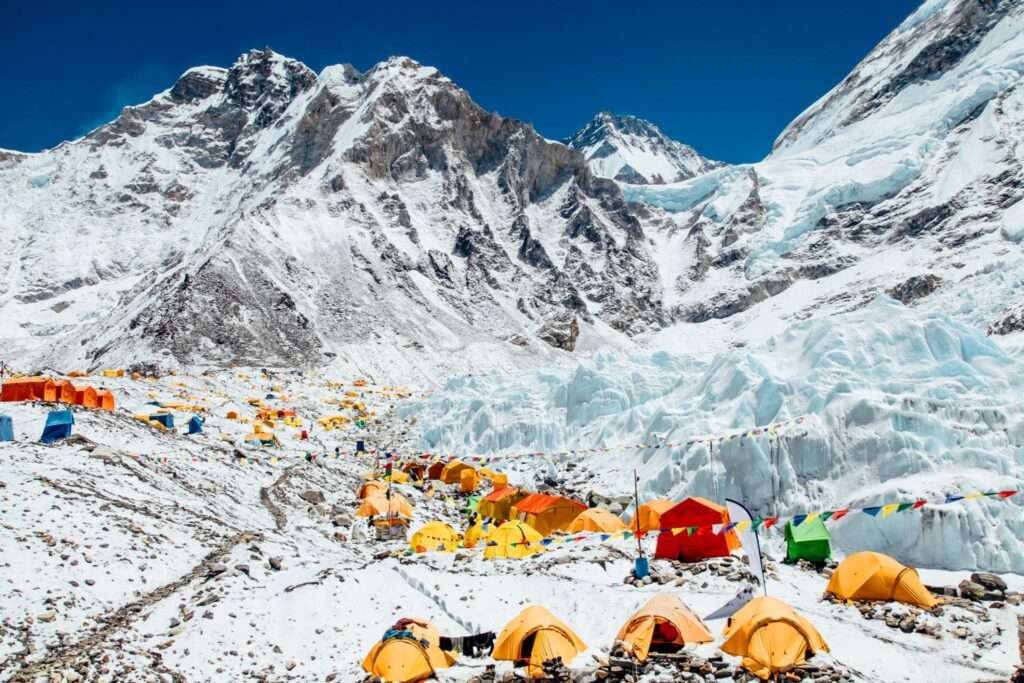
This is the classic. You follow the trail past Namche, Tengboche, and Dingboche, then up toward Gorak Shep (about 5,164 m), where most trekkers sleep before visiting Base Camp. Many also climb Kala Patthar, around 5,550 m, for the best views of Everest. Sources give slightly different heights for Kala Patthar, so treat the figure as approximate.
Altitude is the real challenge here, not technical difficulty. Rest days and slow pacing are essential.
Gokyo Lakes and the Three Passes
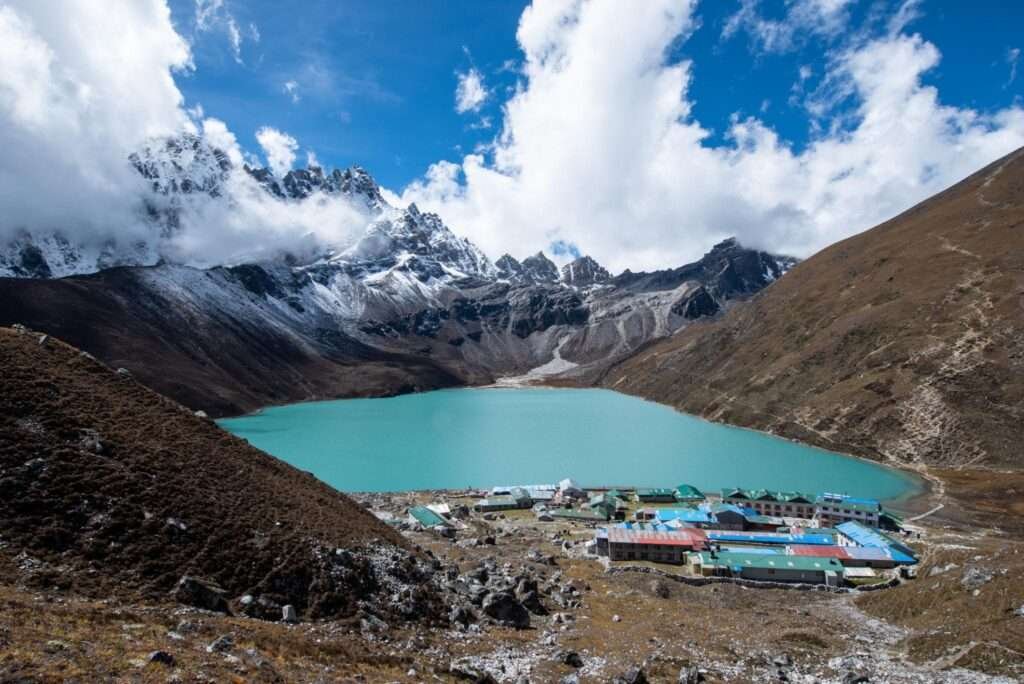
The Gokyo Lakes trek heads up a quieter valley to a series of glacial lakes, with a climb to Gokyo Ri for wide views. The Three Passes trek links three high passes above 5,300 m and is a serious undertaking for experienced trekkers.
Everest Scenic Flight
If you don’t want to trek, a scenic mountain flight from Kathmandu lasts about an hour. It’s a good choice if you have limited time or mobility. Prices vary by operator, roughly US$200–300 per person. Clear skies matter, so autumn and spring are best.
Helicopter Tours
Helicopter tours to the Everest region exist, but the rules have been changing. Commercial helicopter restrictions introduced in 2025 were disputed and adjusted, and operators describe different services in 2026. Ask your operator exactly what is currently offered, and don’t assume a landing near Base Camp is possible.
Best Time to Visit the Everest Region
Timing is one of the biggest questions in any Everest region travel guide. Here is the season-by-season picture.
March to May (spring): Warmer days, rhododendrons in bloom, and good visibility. It’s busy, especially in April and May.
September to November (autumn): Clear skies, stable weather, and the best mountain views. October and November are the peak, so book early.
December to February (winter): Very cold, especially at altitude, with fewer trekkers. Some lodges close, and conditions can be harsh.
June to August (monsoon): Rain and cloud hide the mountains, and Lukla flights are more often delayed. Trails can be wet and slippery.
Weather can change fast at any time of year. Heavy snowfall can block high routes, so build flexibility into your plans.
How Hard Is It? Altitude and Fitness
Most people who struggle on this trek struggle with altitude, not with the walking. Above about 3,000 meters, your body needs time to adjust. A few simple rules help:
- Go up gradually. Rest days at places like Namche Bazaar and Dingboche are part of the plan, not optional extras.
- Don’t ignore symptoms. Headache, nausea, dizziness, and unusual breathlessness are warning signs. Don’t keep climbing with them. Tell your guide and descend if needed.
- Stay hydrated, eat well, and avoid pushing the pace.
- Speak to your doctor before you go, especially about any health conditions or altitude medication.
Fitness helps, but it doesn’t prevent altitude sickness. Even very fit people can be affected.
How to Get to the Everest Region
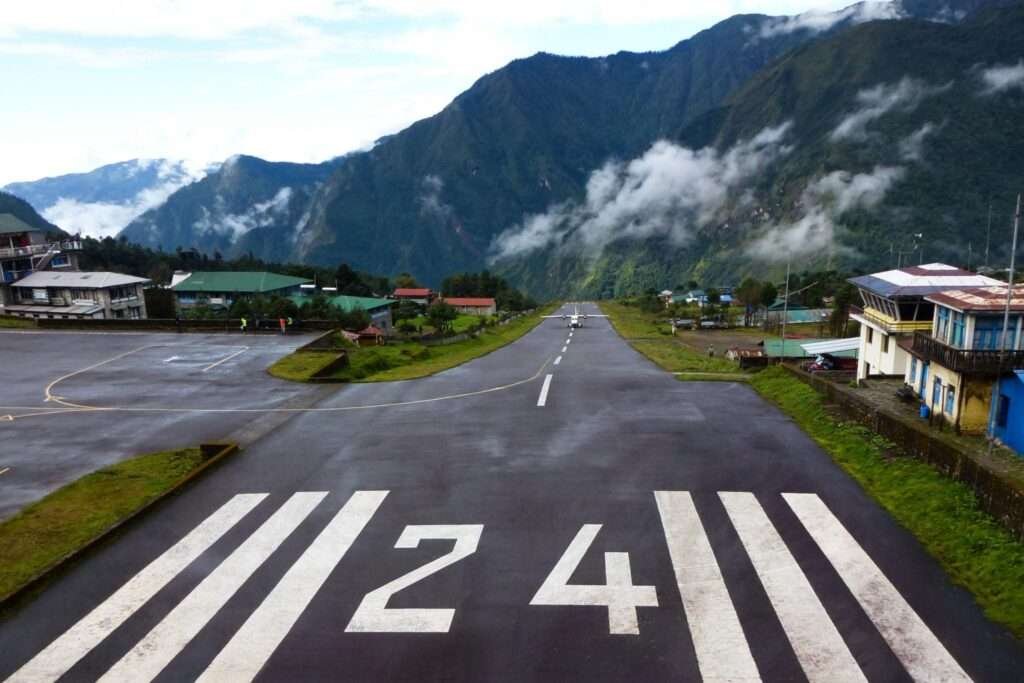
Most trekkers fly from Kathmandu to Lukla, a famously short mountain runway. This is where many itineraries run into delays, so this Everest region travel guide covers it in detail.
Peak-season routing: In the busy spring and autumn seasons, most Lukla flights depart from Manthali Airport in Ramechhap rather than Kathmandu. This eases congestion at Tribhuvan Airport. The drive from Kathmandu to Ramechhap takes roughly 4–5 hours, and many groups leave in the early hours of the morning.
Flight times: The flight from Kathmandu to Lukla takes about 30–35 minutes. From Ramechhap, it takes about 15–20 minutes.
Delays: Weather often cancels or delays flights. Keep spare days in your itinerary, especially at the end of your trip, so you don’t miss your international flight home.
Airlines: Tara Air, Summit Air, and Sita Air are commonly listed as operators on these routes.
Permits, Insurance, and Costs
Here are the main fixed costs. All of these can change, so confirm current figures before you go.
| Item | Typical range |
|---|---|
| Sagarmatha National Park permit | NPR 3,000 for most foreign adults (some sources add 13% VAT). SAARC nationals: NPR 1,500 |
| Khumbu Pasang Lhamu local permit | NPR 3,000 for most foreign adults. Some sources list NPR 2,000 for SAARC nationals |
| Lukla flight (one way) | Roughly US$175–260, usually cheaper from Ramechhap |
| Kathmandu to Ramechhap transfer | Roughly US$20–30 per person by shared vehicle |
| Everest scenic flight | Roughly US$200–300 |
| Helicopter evacuation (if uninsured) | Roughly US$4,000–6,000 from the Khumbu |
About TIMS: Most current sources say the TIMS card is no longer required for Khumbu, because the local permit replaced it. A few disagree, so confirm with your operator.
Insurance: This is non-negotiable. Your policy should cover trekking to at least 6,000 m and name helicopter evacuation explicitly. Standard travel policies often stop at much lower altitudes. Read the wording carefully.
Guided package prices vary widely by operator, season, group size, and inclusions. We don’t quote a single figure, and pricing is available on request.
Do You Need a Guide?
Nepal introduced a national rule in 2023 requiring licensed guides for foreign trekkers in many protected areas. Sources describe Khumbu as locally exempt, but they don’t agree on the details, and the picture has been inconsistent.
Whatever the rules, we recommend trekking with a licensed guide. A guide helps with acclimatization, weather decisions, trail navigation, and emergencies. They can also make the difference in a medical situation.
Teahouse Life: What to Expect
You’ll sleep in simple teahouses, which are basic mountain lodges, rather than hotels. Expect these:
- Rooms: Small, basic, and unheated. Bring a warm sleeping bag.
- Food: Menus offer dal bhat, noodles, soups, and pasta. Dal bhat is the classic trekker’s meal.
- Charging and Wi-Fi: Often available for a fee, and slower and less reliable at altitude.
- Cash: Carry enough Nepali rupees. ATMs are limited and unreliable beyond the lower villages.
- Cold: Temperatures drop sharply at night. Pack layers.
Sample Itineraries From This Everest Region Travel Guide
6–8 days: Everest View trek. Fly to Lukla, trek to Namche, acclimatize with a hike to the Everest View Hotel, continue to Tengboche, then return and fly back.
12–14 days: Everest Base Camp trek. Fly to Lukla, trek via Namche and Tengboche to Dingboche, then on to Gorak Shep, Base Camp, and Kala Patthar. Return the same way, with spare days for delays.
Without trekking: Take a one-hour scenic flight from Kathmandu, and combine it with the Kathmandu Valley.
Responsible Trekking in Sagarmatha National Park
The Everest region is a fragile place and a living community. A few habits make a real difference:
- Carry a reusable bottle and avoid single-use plastic.
- Take your waste with you whenever you can.
- Pass mani stones and prayer wheels on the left, and ask before photographing people or monks.
- Hire local guides and porters, and treat them fairly. Don’t overload porters.
- Choose a reputable operator who follows park rules.
Everest Region for Indian Travelers
Indian citizens don’t need a visa for Nepal, and a valid passport or voter ID is sufficient. SAARC nationals also pay lower park and permit fees, as shown above. Several airlines and agencies list separate Lukla fares for Indian nationals, so ask when you book.
LGBTQ+ travelers can read our note on Nepal in our guide to the UNESCO sites in Nepal.
Combine the Everest Region With the Rest of Nepal
Many travelers spend a few days in Kathmandu before or after their trek. Our Kathmandu travel guide covers the city. For lakes and mountain views without altitude, see our Pokhara travel guide. For wildlife, see our Chitwan National Park travel guide. Sagarmatha is also one of Nepal’s four World Heritage properties, covered in our guide to the UNESCO sites in Nepal.
Ghum India Ghum also works as a DMC for Nepal and a DMC for Sri Lanka, as well as India, through trusted local partners. That means one team can coordinate a multi-country route, such as Nepal, India’s Golden Triangle, and Sri Lanka.
Frequently Asked Questions About the Everest Region
A. In Nepal’s Solukhumbu district, in the Khumbu area of the Himalayas.
A. About 12–14 days from Kathmandu, including flights and acclimatization days.
A. The Sagarmatha National Park permit and the Khumbu Pasang Lhamu local permit. Most current sources say TIMS isn’t required.
A. March to May and September to November.
A. Yes. A scenic flight from Kathmandu lasts about an hour.
A. Yes. It should cover trekking to at least 6,000 m and name helicopter evacuation.
Plan Your Trip
This Everest region travel guide should help you choose the right way to experience Khumbu, whether that means a one-hour flight, a gentle Everest View trek, or the full journey to Base Camp. Prepare carefully, respect the altitude, and allow flexibility. The mountains reward patience.
If you’d rather have the logistics handled, Ghum India Ghum builds custom Nepal and India itineraries for travelers from the US, Europe, and India. We have more than 15 years of experience in India travel, five years running Nepal itineraries with trusted local partners, and recognition from the Ministry of Tourism, Government of India. And hold a 4.9 out of 5 rating from 744 reviews on Tripadvisor and a 4.8 out of 5 rating across more than 800 Google reviews at the time of writing. We also have offices in Milan and the USA, so you get direct, time-zone-friendly support before you go.
If you’d like the Everest region as part of your trip, tell us your dates, fitness level, and interests, and we’ll talk through what’s possible. Explore our Ultimate Nepal Tour and our Kathmandu and Pokhara tour packages, or see our Golden Triangle Tour with Nepal to combine Nepal with Delhi, Agra, and Jaipur. Get in touch and we’ll help you build the right route.
