
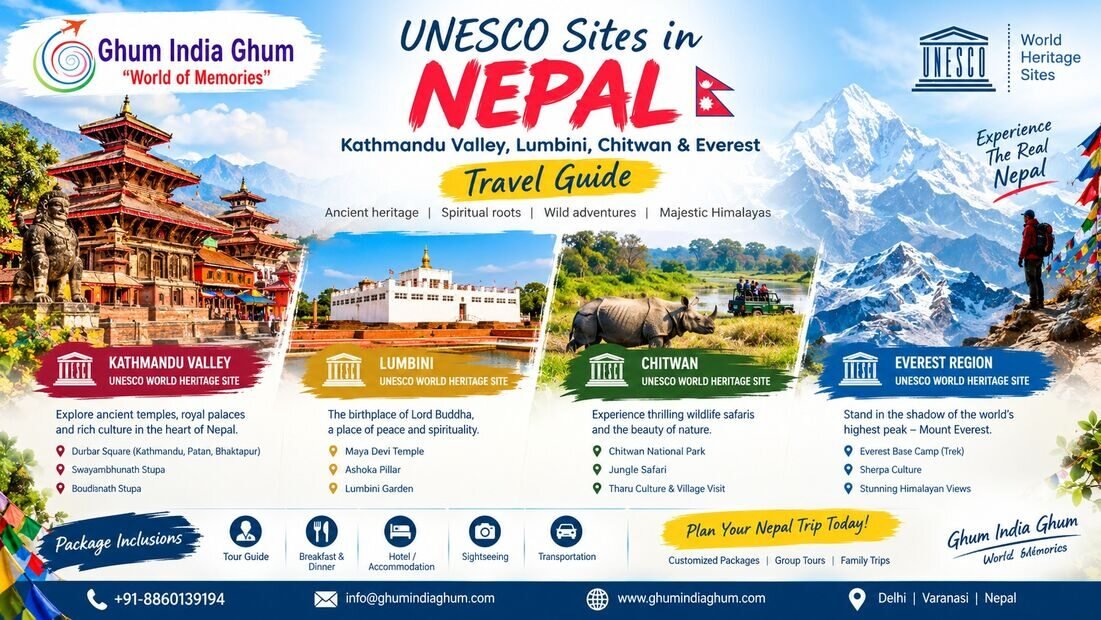

Nepal packs an astonishing range into a small country. In one trip, you can walk through medieval royal squares, stand where the Buddha was born, track a one-horned rhino through tall grass, and look up at the world’s highest mountain. UNESCO protects all of it.
This guide to the UNESCO sites in Nepal covers every World Heritage property: the Kathmandu Valley, Lumbini, Chitwan National Park, and Sagarmatha National Park. You’ll find current entry fees, how to travel between sites, the best time to go, sample itineraries, and a note for LGBTQ+ travelers. A short FAQ is included for quick planning.
Quick answer: Nepal has four UNESCO World Heritage properties. Two are cultural (the Kathmandu Valley and Lumbini) and two are natural (Chitwan and Sagarmatha National Parks). The Kathmandu Valley property covers seven separate monument zones, so many travel guides count ten sites in total. The best time to visit is October to November and March to April.
UNESCO Sites in Nepal at a Glance
| Property | Type | Inscribed | Where | Nearest base |
|---|---|---|---|---|
| Kathmandu Valley | Cultural | 1979 | Kathmandu, Lalitpur, Bhaktapur | Kathmandu |
| Sagarmatha National Park | Natural | 1979 | Everest region | Lukla |
| Chitwan National Park | Natural | 1984 | Southern Terai | Sauraha |
| Lumbini | Cultural | 1997 | Near the Indian border | Bhairahawa |
How Many UNESCO Sites Are in Nepal?
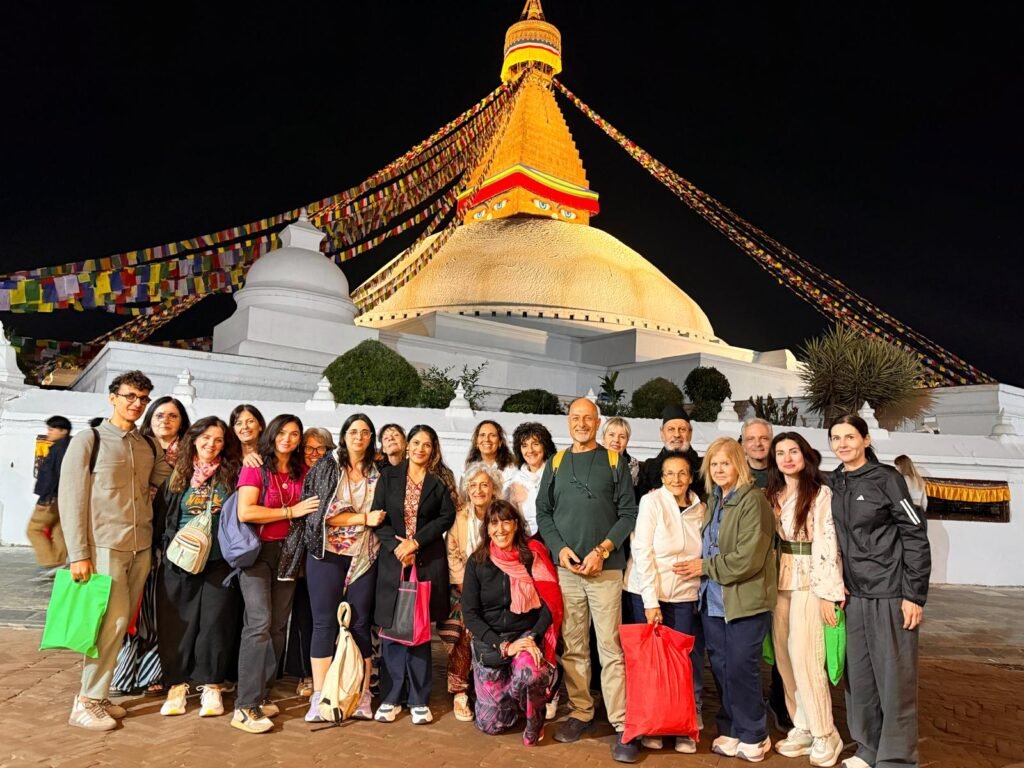
The honest answer is four, with a catch. UNESCO lists the Kathmandu Valley as a single property. That property contains seven monument zones: three Durbar Squares, two Buddhist stupas, and two Hindu temple complexes.
Tour operators and guidebooks often count those seven zones separately. That’s how you end up with “ten UNESCO sites in Nepal” in many articles. Both numbers are correct, as long as you know what is being counted.
Nepal also has 15 more sites on its tentative list. These aren’t World Heritage Sites yet. We cover them near the end of this guide.
Why Visit the UNESCO Sites in Nepal
Few countries pack this much variety into a single trip. Nepal’s World Heritage sites cover living temples, Buddhist pilgrimage, lowland wildlife, and Himalayan wilderness.
They’re also surprisingly easy to combine. The Kathmandu Valley is the hub. Chitwan and Lumbini are a short flight or a day’s drive away, and the Everest region starts with a scenic flight from Kathmandu.
Best Time to Visit
October to November: The best season. Skies are clear, temperatures are comfortable, and mountain views are at their sharpest. It’s also festival season, so book early.
March to April: Warm days and good visibility. A strong second choice.
December to February: Cold nights in the valley and very cold in the Everest region. Chitwan stays pleasant, though mornings can be foggy.
June to September: Monsoon. Rain and cloud hide the mountains, and flights run late more often. It’s the quietest season and the cheapest.
1. Kathmandu Valley: Seven Monument Zones
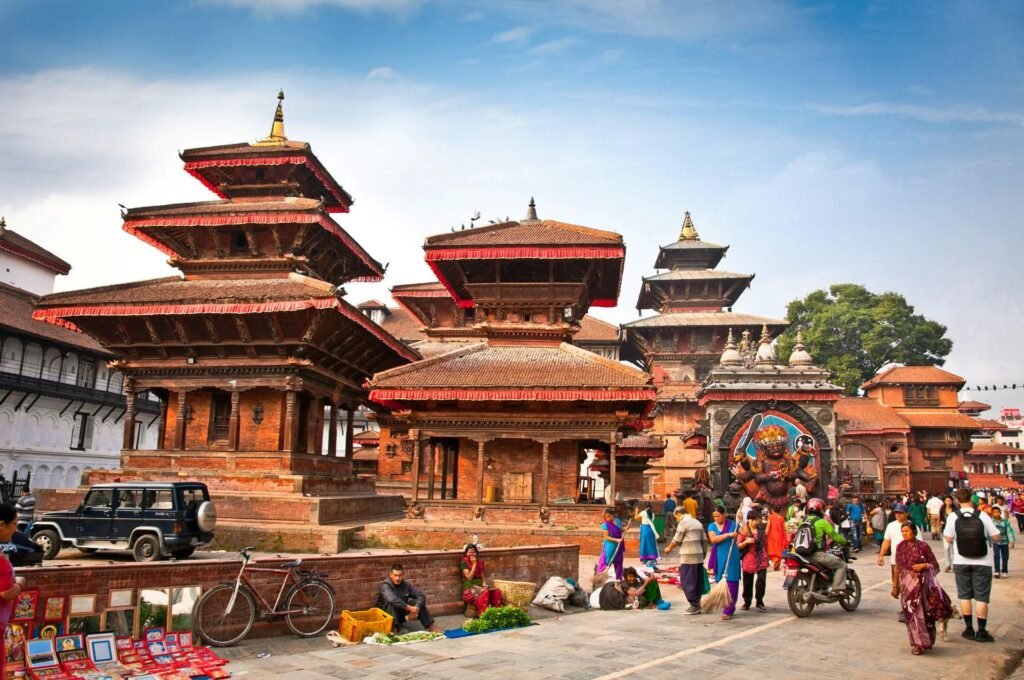
The Kathmandu Valley was inscribed in 1979 and holds one of the densest clusters of living heritage in the world. These aren’t museum pieces. Rituals take place daily, often while you’re standing there.
The 2015 earthquake damaged many monuments, and restoration is still underway. You may see scaffolding at some sites, especially Kathmandu Durbar Square. All seven remain open and worth visiting.
| Site | What it is | Foreign nationals (NPR) |
|---|---|---|
| Kathmandu Durbar Square | Former royal palace complex | 1,000 |
| Patan Durbar Square | Royal square with the Patan Museum | 1,000 |
| Bhaktapur Durbar Square | Best-preserved medieval city | 1,800 |
| Swayambhunath | Hilltop Buddhist stupa | 200 |
| Boudhanath | One of the world’s largest stupas | 400 |
| Pashupatinath | Sacred Hindu temple complex | 1,000 |
| Changu Narayan | Oldest temple in the valley | 300 |
Together, the seven cost roughly NPR 5,700 for a foreign visitor. These are early 2026 rates and can change, so confirm before you go. SAARC nationals, including Indians, generally pay reduced rates. At Patan the SAARC rate is NPR 250, and at Bhaktapur it is NPR 500.
Kathmandu Durbar Square is the historic heart of the old city and home to the Kumari, Nepal’s living goddess. See our Kathmandu travel guide for planning.
Patan Durbar Square is the most refined of the three squares. The Patan Museum alone is worth the ticket. Read our Patan travel guide.
Bhaktapur Durbar Square feels like a medieval town frozen in time, with a mostly car-free core. Don’t miss the five-story Nyatapola Temple. Our Bhaktapur travel guide covers it in depth.
Swayambhunath sits on a hill above the city, with 365 steps and resident monkeys. It’s a good place for sunrise.
Boudhanath is the center of Nepal’s Tibetan Buddhist community. Walk the circuit clockwise at dusk, when butter lamps are lit.
Pashupatinath is Nepal’s holiest Hindu site. Non-Hindus can’t enter the main temple but can view the complex from across the river. Open-air cremations take place daily, so keep a respectful distance and don’t photograph grieving families.
Changu Narayan sits on a quiet ridge above Bhaktapur. Its sculpture is among the oldest and finest in the valley.
How long do you need?
Allow two to three days. A simple plan works well:
- Day 1: Swayambhunath in the morning, then Kathmandu Durbar Square and Patan.
- Day 2: Pashupatinath, then Boudhanath at dusk.
- Day 3: Bhaktapur and Changu Narayan.
Dress modestly. Cover your shoulders and knees at every religious site.
2. Lumbini: The Birthplace of the Buddha
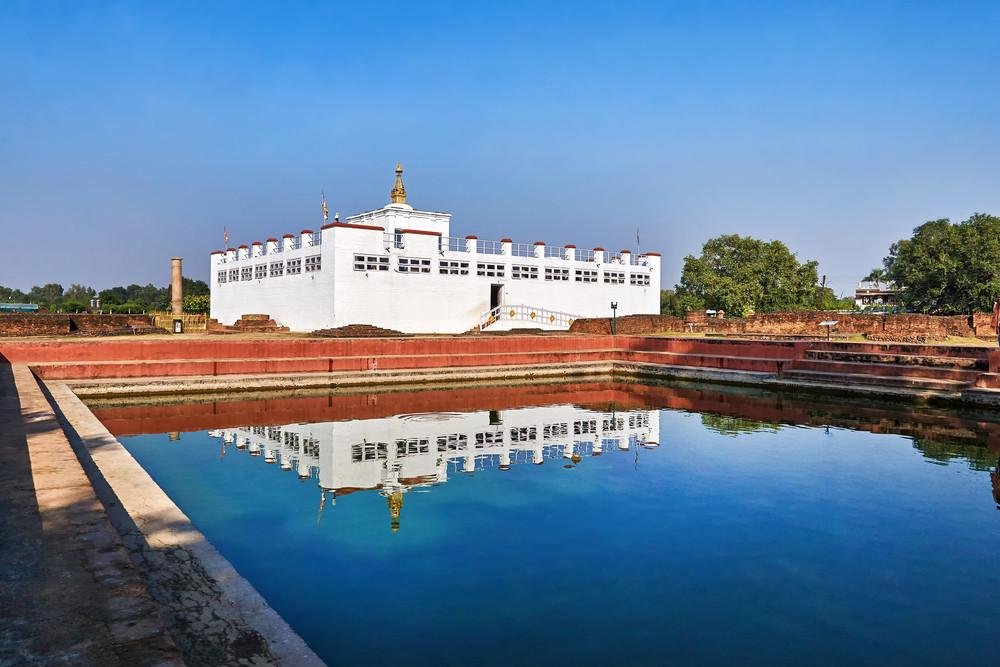
Lumbini is the most important Buddhist pilgrimage site in the world. It marks the place where Siddhartha Gautama, later the Buddha, was born. It was inscribed in 1997.
The Maya Devi Temple stands at the heart of the Sacred Garden, over the spot traditionally marked as the birthplace. Nearby is an Ashoka Pillar. According to its inscription, the Emperor Ashoka visited Lumbini in the 3rd century BCE. A wider Monastery Zone holds temples built by Buddhist communities from many countries.
Lumbini feels very different from the valley. It’s flat, quiet, and spread out. Many visitors rent a bicycle or rickshaw to move between monasteries.
How to get there: Lumbini sits roughly 280–300 km from Kathmandu. A flight to Bhairahawa’s Gautam Buddha Airport takes about 30–35 minutes, followed by a drive of around 30 minutes. Tourist buses take 7–10 hours. From India, the Sunauli border is the common overland route.
Entry fee: Published figures vary widely between sources, and SAARC nationals pay less. Confirm the current price at the gate.
How long? Allow one full day, or two nights if you want to explore the monasteries properly.
3. Chitwan National Park
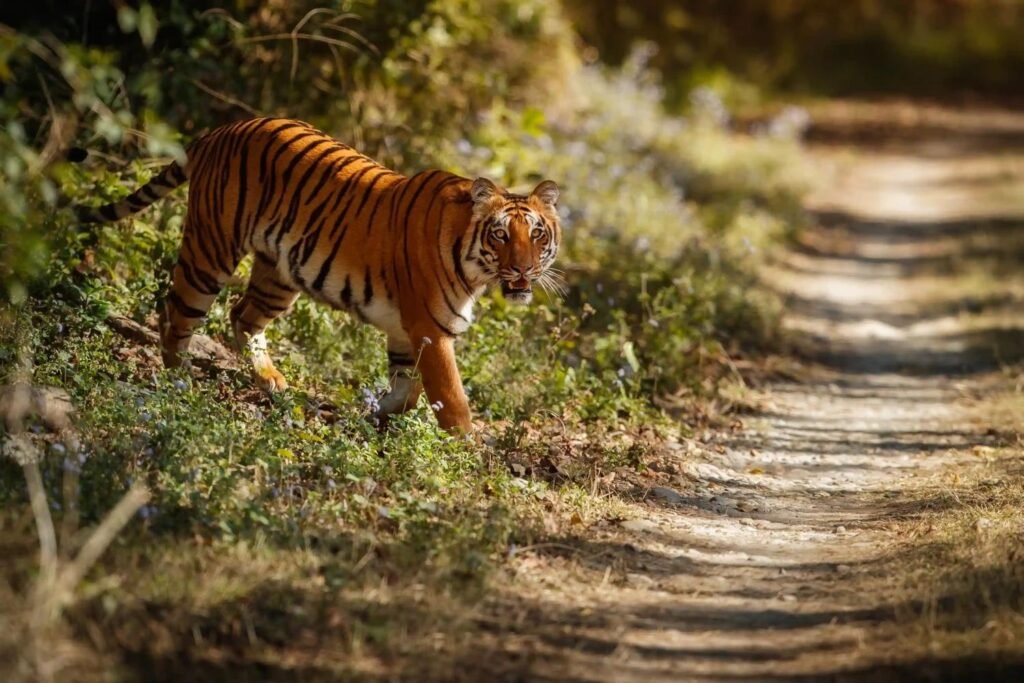
Chitwan was inscribed in 1984 and is Nepal’s best-known wildlife destination. It protects lowland jungle and grassland in the southern Terai, and it’s one of the best places in South Asia to see the one-horned rhinoceros. Bengal tigers live here too, though they’re far harder to spot.
Most visitors base themselves in Sauraha. Activities include jeep safaris, canoe rides, and guided jungle walks. A guide is required inside the park.
Entry fee: NPR 2,000 per day for most foreign nationals and NPR 1,000 for SAARC nationals. One source adds 13% VAT. Children under 10 enter free.
How to get there: Chitwan sits roughly 150–165 km from Kathmandu. A tourist bus takes about 5–6 hours. A short flight to Bharatpur takes about 25 minutes, followed by a 30-minute drive to Sauraha.
How long? Two nights gives you time for at least two safaris.
4. Sagarmatha National Park: The Everest Region
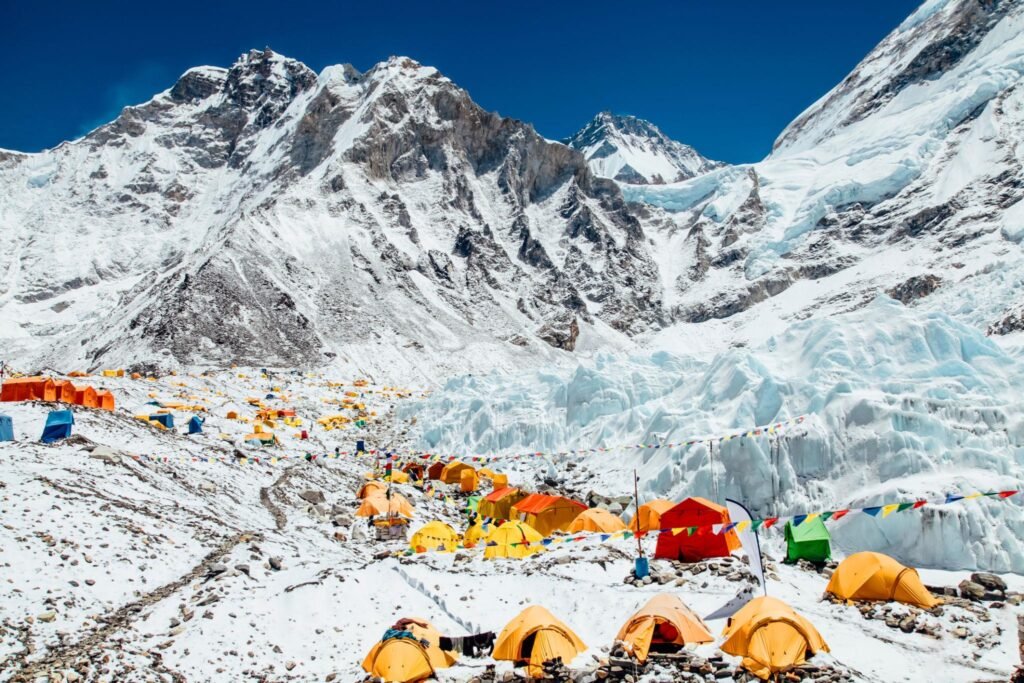
Sagarmatha National Park was inscribed in 1979 and is home to Mount Everest. It protects a high-altitude landscape of glaciers, deep valleys, and Sherpa villages and monasteries.
Most travelers enter this park to trek, with Everest Base Camp the classic goal. The trek typically takes around two weeks round trip and needs good fitness and proper acclimatization. If you don’t have the time or want to trek, scenic mountain flights from Kathmandu offer a popular shorter way to see Everest.
Park entry fee: NPR 3,000 for most foreign nationals and NPR 1,500 for SAARC nationals. Trekkers also need additional permits, which your tour operator can arrange.
How to get there: Most trekkers fly from Kathmandu to Lukla, though routing can vary by season. Build in spare days, because mountain flights are often delayed by weather.
Getting Between the Sites
| Route | By air | By road |
|---|---|---|
| Kathmandu to Chitwan | About 25 minutes to Bharatpur | 5–6 hours |
| Kathmandu to Lumbini | About 30–35 minutes to Bhairahawa, plus a 30-minute drive | 7–10 hours |
| Kathmandu to the Everest region | Flight to Lukla, then trekking | Not practical for most visitors |
Domestic flights are weather-dependent, especially in monsoon. Always keep a buffer day before an international departure.
Where to Stay
- Kathmandu Valley: Thamel is the most convenient base. Boudha and Patan are calmer alternatives.
- Chitwan: Lodges in Sauraha range from simple guesthouses to jungle resorts.
- Lumbini: Hotels cluster in Lumbini Bazaar. Some monasteries also offer simple stays.
- Everest region: Trekkers stay in teahouses along the trail.
What to Eat
- Newari food in the valley: Try juju dhau, the famous king curd of Bhaktapur, plus momos and choila.
- Dal bhat: Nepal’s staple meal, served everywhere and often refilled for free.
- Lodge meals: In Chitwan and on the trek, most meals are served at your lodge or teahouse.
Sample Itineraries
7 days: Heritage and wildlife
- Days 1–3: Kathmandu Valley’s seven monument zones.
- Day 4: Travel to Chitwan.
- Day 5: Full day of safaris.
- Day 6: Return to Kathmandu.
- Day 7: Departure.
10 days: Heritage, wildlife, and Lumbini Follow the plan above, then add a flight from Kathmandu to Lumbini for two nights before returning.
With Everest: Add at least two weeks for Everest Base Camp, or a morning for a scenic mountain flight. For other trekking ideas, see our Pokhara travel guide.
Nepal’s Tentative List: Future UNESCO Sites
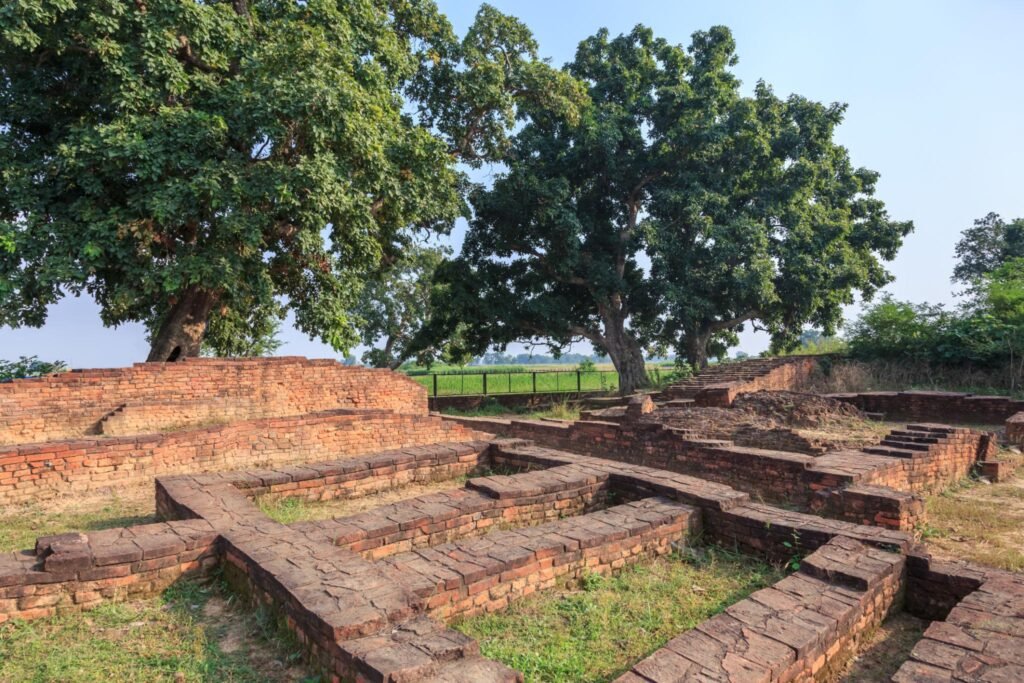
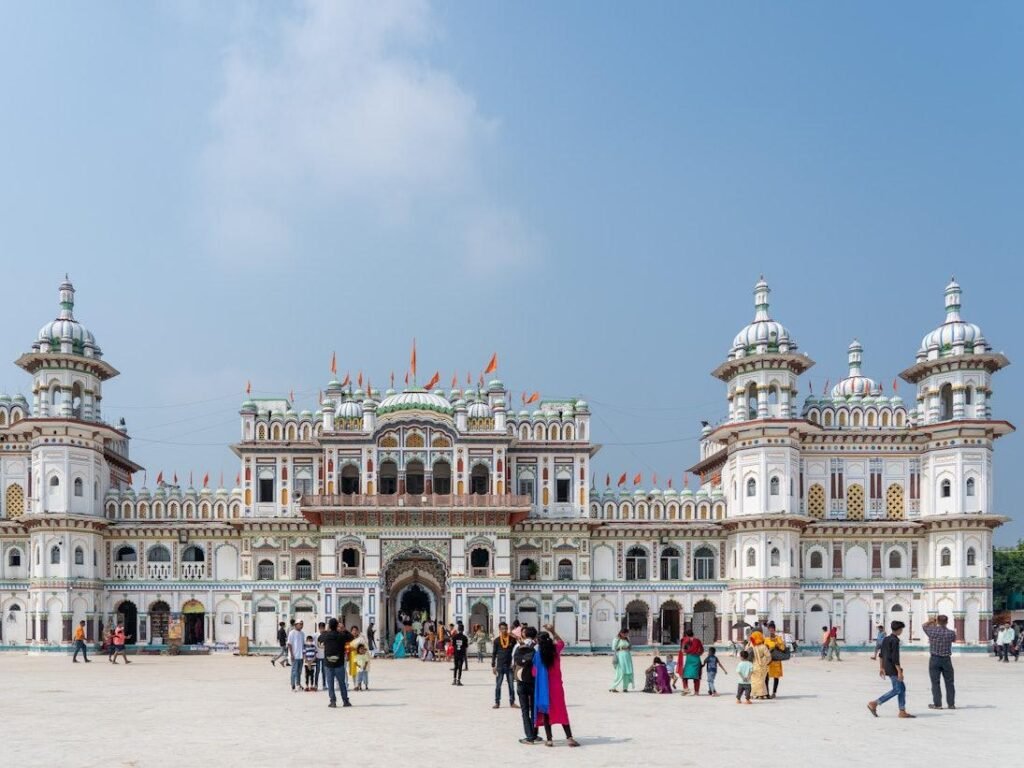
Nepal has 15 sites on UNESCO’s tentative list. A tentative listing is only the first step, so these aren’t World Heritage Sites yet.
Three are currently in the nomination process: Tilaurakot, Panauti, and the Ram Janaki Temple in Janakpur. Tilaurakot, the ancient Shakya capital, was declined at the 2025 World Heritage Committee session, and Nepal is preparing to resubmit it. This is one to watch, since Nepal’s list could grow.
Nepal for Indian Travelers
Indian citizens don’t need a visa to enter Nepal. A valid passport or voter ID is sufficient. SAARC rates also cut entry costs. Chitwan is NPR 1,000 instead of NPR 2,000, and Sagarmatha is NPR 1,500 instead of NPR 3,000.
Lumbini is especially easy from India. The Sunauli border is the usual crossing, a few hours from Gorakhpur, so Lumbini fits neatly into a Buddhist pilgrimage that also covers Bodh Gaya and Sarnath.
Nepal for LGBTQ+ Travelers
Nepal is generally regarded as one of South Asia’s more LGBTQ+-friendly destinations, though the law and daily life don’t always match.
Same-sex relationships have been legal since 2007, and Nepal 2015 constitution prohibits discrimination against sexual minorities. On 18 June 2026, the Supreme Court ruled that the government must extend marriage rights to same-sex couples. Advocacy groups are now urging Parliament to put that ruling into law, so the details are still developing.
Society remains traditional, especially outside the cities and around religious sites. Most travelers find Nepal welcoming, but discretion with public affection is sensible at temples and in rural areas.
Ghum India Ghum has welcomed LGBTQ+ couples and groups on our trips, with positive feedback. We don’t run a separate LGBTQ+ program, but we’re happy to discuss your preferences and plan accordingly.
Connect Lumbini to the Buddhist Circuit: India and Sri Lanka
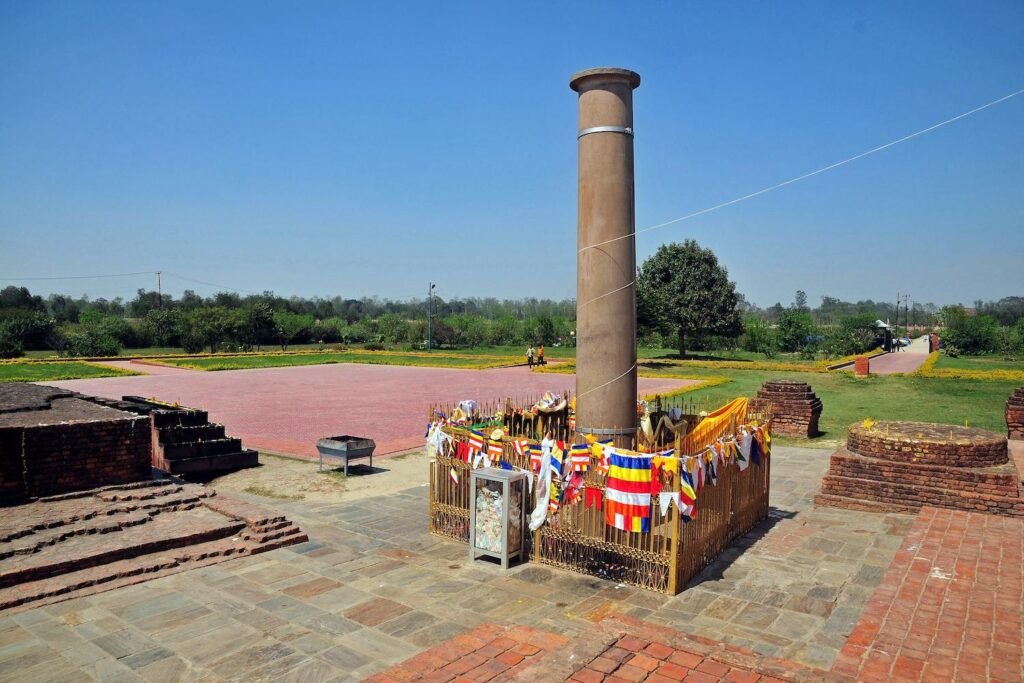
Lumbini is the first stop on the Buddha’s story, and it’s a natural start for a longer Buddhist journey.
From Lumbini, the trail crosses into India. Bodh Gaya is where the Buddha attained enlightenment, and Sarnath is where he gave his first sermon. Further west, the stupas at Sanchi connect to the Emperor Ashoka, who helped spread Buddhism across Asia. See our guide to the UNESCO sites in Madhya Pradesh for that leg.
The story also reaches Sri Lanka. According to Sri Lankan tradition, Buddhism arrived there through Ashoka’s family. The Sri Maha Bodhi tree in Anuradhapura is said to grow from a sapling of the Bodh Gaya tree.
Ghum India Ghum can arrange this as one connected route. We work as a DMC for Nepal and a DMC for Sri Lanka as well as India, through trusted local partners, so one team coordinates the whole trip.
Is Nepal Safe and Responsible to Visit?
Nepal is generally safe for tourists, and its heritage sites are well-visited. Use a licensed guide for treks and safaris, and respect local customs at religious sites. Choose operators that follow park rules and support local communities.
Frequently Asked Questions | UNESCO Sites in Nepal
A. Four World Heritage properties. The Kathmandu Valley property covers seven monument zones, so many guides count ten sites.
A. The Kathmandu Valley and Lumbini are cultural. Chitwan and Sagarmatha National Parks are natural.
A. Seven to ten days covers the Kathmandu Valley, Chitwan, and Lumbini. Add two weeks for Everest Base Camp.
A. October to November and March to April.
A. No. Indian citizens can enter with a valid passport or voter ID.
A. Yes. Many travelers pair Nepal with the Golden Triangle or a Buddhist circuit.
Plan Your Trip
This guide to the UNESCO sites in Nepal should help you plan a trip that matches your time and interests. Whether you want temples, wildlife, pilgrimage, or mountains, Nepal rewards travelers who slow down.
If you’d rather have the logistics handled, Ghum India Ghum builds custom Nepal and India itineraries for travelers from the US, Europe, and India. We have more than 15 years of experience in India travel, five years running Nepal itineraries, and trusted partners on the ground. We’re recognized by the Ministry of Tourism, Government of India, and we have offices in Milan and the USA for direct, time-zone-friendly support before you go.
Travelers trust us with their trips. On Google, we hold a 4.8 out of 5 rating across more than 800 reviews at the time of writing. Recent Nepal reviews, several written in Italian, describe a trip across Kathmandu, Bhaktapur, and Pokhara. Reviewers mention guides who explained every site and temple, a smooth airport welcome, and flights, hotels, guides, and shopping all organized in detail. One traveler called the team professional, serious, and competent. Another described a well-organized trip into Nepal’s nature and culture.
If you’re a travel agency looking for a DMC for Nepal, or a traveler ready to start planning, explore our Kathmandu and Pokhara tour packages. For a Buddhist trail itinerary, see our Buddha Footmark tour package. To combine Nepal with Delhi, Agra, and Jaipur, try our Golden Triangle Tour with Nepal. Get in touch and we’ll help you build the right route for your time and interests.
